


Article
‘NOT RECOMMENDED’ The Archive of the Associated British Picture Corporation’s Readers’ Department
12th November, 2026
FROM THE CURRENT ISSUE
Article by Neil Pearson.
Some bad books are remembered, but many more good ones are forgotten.
Jack Common wrote three books, and all three were good: two semi-autobiographical novels, Kidder’s Luck and The Ampersand, and Freedom of the Streets, a collection of essays. All three were well reviewed, but all three sold poorly. A working-class socialist born in Newcastle in 1903, Jack Common moved to London in 1928 to make his living as a writer, and by 1930 was working at the literary magazine The New Adelphi. Founded by John Middleton Murry, the Adelphi was politically aligned with the Independent Labour Party, and one of Common’s fellow writers at the magazine was George Orwell, whose essays The Spike and A Hanging both first appeared there in 1931. Common and Orwell were to become lifelong friends but had to negotiate an inauspicious first meeting. Common had suspected the Eton-educated, unmistakably ‘wellbred’ Orwell of being ‘[a] sheep in wolf’s clothing […] taking in the height and stance, accent and cool built-in superiority of the public school presence’.2 Orwell, by contrast, was immediately taken with Common, in whom he saw not only a gifted writer but an authentically proletarian one, a rare breed among that period’s massed ranks of middle-class Marxists. Reviewing Common’s Freedom of the Streets, Orwell had identified ‘the authentic voice of the ordinary man, the man who might infuse a new decency into the control of affairs if only he could get there, but who in practice never seems to get much further than the trenches, the sweatshop and the jail.’
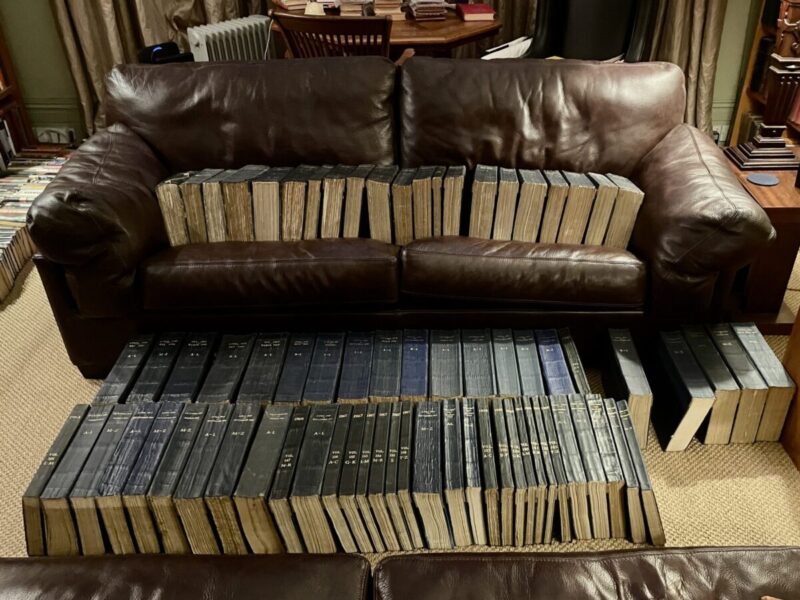
In Common’s case, it turned out to be the sweatshop. Unable to make ends meet from his published writing, for nearly twenty years – the last of his life – he churned out hundreds of in-house book reports, one of a phalanx of similarly straitened writers working for a British film studio looking for books whose rights could be bought cheaply and made into equally cheap movies. For the writers of the reports the work was unsung, chronically underpaid, and endless. But together, inadvertently, they produced a literary sensation. The archives of the Readers’ Department of the Associated British Picture Corporation, unseen for eighty years, earmarked for destruction and rescued from a skip, provide us with one of the most comprehensive and detailed surveys of mid 20th-century British fiction in existence (and I add ‘one of ’ there reluctantly).
* * *
Housed in a dowdy corner block on the Elstree lot opposite the main administration building, the job of Associated British Picture Corporation’s Readers’ Department between 1942 and 1969 was to identify potential film projects for the studio. Most of the material under consideration arrived in the form of new novels, usually submitted to ABPC by their authors’ literary agents or publishers. Unsolicited screenplays were also assessed (though not encouraged), as were older titles by authors whose work had enjoyed recent screen success and whose back catalogues might contain other profitable ideas for films. Readers also attended new plays to assess
their potential for film adaptation.
There was a little experimentation with format in the early 1940s, after which all reports were written and presented in strict accordance with ABPC house style. The first page would carry author, title and genre, how and by whom the work had been submitted,
and a date stamp indicating when the reader’s report was submitted. The writer of the report would also usually be identified, either by name or initials. A brief outline of the story would be given on the first page, and there would then follow a long, highly detailed synopsis. More a potted version of the work itself than a mere sketch of its plot, the synopsis was thorough enough to provide studio heads with a full working knowledge of the material, obviating the need for them to spend three days reading the whole book themselves. In conclusion, the reader would give their verdict on the work, and detailed reasons for their opinion as to whether or not to buy the rights. In almost all cases, that decision was damning and final: ‘Not Recommended’. Occasionally the reader, either enthused or unsure, would call for a second opinion, and if the second opinion was also favourable the material would be fast-tracked to studio heads for their immediate consideration. The system was far-reaching, diligent and rigorous. It was also very often wrong.