



Ian Fleming
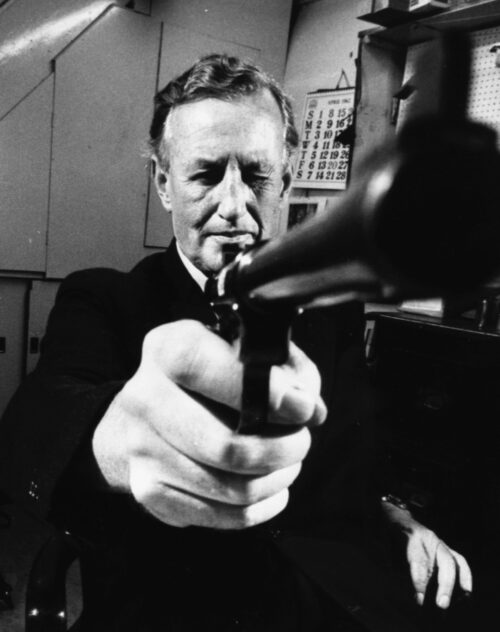
It was in 1929 that Ian Fleming, strolling down Bond Street as only a confident twenty-one year old can, saw a book by D.H. Lawrence in the window of the antiquarian bookseller, Dulau. He went in and buttonholed one of the employees. It was Percy Muir, who fostered Fleming’s enthusiasm for books and helped him to develop a collecting brief around first editions of books marking milestones in western civilisation: penicillin, golf, bicycles, soccer, bridge, communism, the atomic bomb, the boy scout movement, television – anything first published after 1800.
The brief had its challenges; many scientific advances saw the light of day in fragile pamphlets of only a few pages. But prices were low by today’s standards; On the Origin of Species was bought for £10, Einstein’s statement of his general relativity theory for £1 5s 0d and the 1848 Manifest der Kommunistischen Partei 1848 for £94. The collection blossomed and when the historic exhibition, Printing and the Mind of Man was held in July 1963, Fleming was the second largest lender after King’s College, Cambridge. Upon Fleming’s death in 1964, the collection was bought by the Lilly Library of Bloomington, Indiana, together with the James Bond manuscripts and associated works.
Fleming is best remembered today, of course, as the creator of James Bond but he was a man of many parts and a serious bibliophile. His role in co-founding The Book Collector and supporting it through its first decade of life is one of his many legacies. The Queen Anne Press, which Fleming directed in the early 1950s, continues to flourish and today publishes special editions of his works, alongside other important twentieth-century authors – visit www.queenannepress.co.uk to find out more.