


News
Book Review: Too Good to Waste: Recycling Paper in the Eighteenth Century
6th November, 2026
Adam Smyth
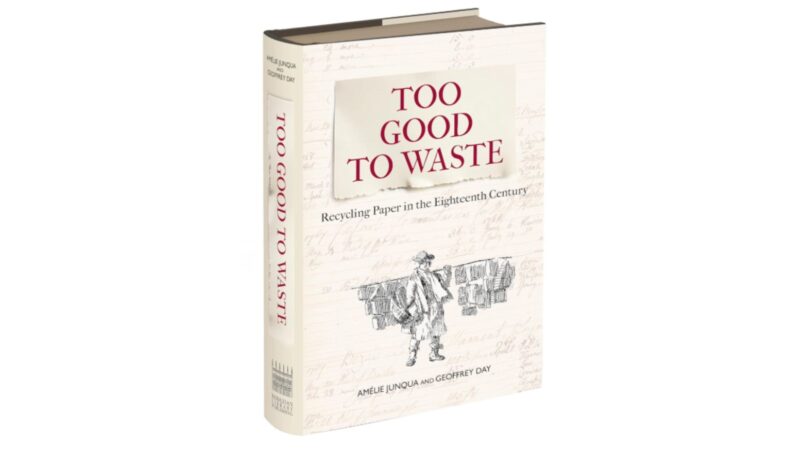
Too Good to Waste: Recycling Paper in the Eighteenth Century
By Amélie Junqua and Geoffrey Day
(Oxford: Bodleian Library Publishing, 2026. 480 pp., illus, £120. isbn 9781851246533)
Reviewed in The Book Collector Autumn 2026 Issue
The history of waste is a mix of two narratives that pull in different directions: one is a story of bibliographical failure, of printed pages no longer wanted by anyone, of self-publishing authors who produced unreadable books; another is a story of recycling, or remaking, of turning unwanted pages into something with value, whether that’s a binding support or the lining of a box or the curl papers, or papillotes, that twisted fashionable hair. Waste might even serve as a currency substitute: in 1779, papermaker George Dodd of Chenies, Buckinghamshire, offered ‘two broke sheets of Fools-cap paper’ for anyone helping to locate his apprentice John Davies, who had fled. Too Good to Waste surveys with unique richness this culture of 18th-century waste paper, tracking its object from the paper-making process itself, to the printing house, to the black market, right out to the other end, as it were, to what Catullus called cacata carta, or ‘bum fodder,’ in Alexander Brome’s ringing 17th-century words.
In the print shop, waste paper was everywhere, reused in an almost desperate culture of economy: used to line type case compartments; to wrap type; to serve as tympan sheets. Waste (Joseph Moxon delights in these kinds of detail) might be chewed and, with a bodkin, squeezed in between loose type, like filling for a tooth. It covered the windows, to keep the cold or the heat out.
Certain kinds of publication moved quickly into waste. Thomas Dyche’s school text A Guide to the English Tongue (1707) was a huge seller – the 100th edition appeared in 1793 – but readers had little or no interest in preserving the book once its educative function had served. In an illustration of the paradox of print popularity (bestsellers disappeared; unread books on shelves persisted), Dyche’s widely sold text had a survival rate of about 1 copy in 55,000. Jobbing printing – the non-bookwork that kept most printers going – produced extraordinary amounts of waste paper, as advertisements and flyers quickly became obsolete. More established publications might also, through low sales, become radically unwanted, and Junqua and Day are great on the follies of the Learned Press of Oxford University Press. There are descriptions of extreme slow or non-sellers, like the 1738 Bodleian catalogue of printed books: 442 unsold copies were converted to 33⁄4 tons of waste. John Channing’s edition of Albucasis de Chirurgia (1778) is stranger still: as a result of overprinting and what we might call maximally low sales, compounded by the death of the editor, in 1785 there were 376 copies remaining unsold from an official initial print run of 350.
Some individuals collected and preserved waste, whether to patch up defective copies, or to issue dodgy ‘second’ editions when the first hadn’t sold. Others held on to scraps and fragments with a dawning sense of posterity – collectors including not only those from the ‘club of leisured men of letters’ (Richard Rawlinson, Peter le Neve), but also John Bagford and Joseph Ames, figures ‘socially peripheral yet instrumentally crucial’. John Ratcliffe kept the printed leaves that wrapped the cheeses that arrived in his Bermondsey shop. ‘Hence rose his passion for collecting the black-letter,’ wrote Thomas Frognall Dibdin, ‘as well as Stilton.’ Over 30 years, Ratcliffe built a collection that included 48 Caxtons. Chandlers and grocers handled so much printed waste that it’s probably right to think of them as among the key bibliographical agents of the 18th century.
Stealing and selling waste paper was common, and Junqua and Day make rich use of the digitised records of the Old Bailey archives (oldbaileyonline.org) to draw to the surface previously submerged narratives of, typically, employees stealing paper over a long period of time, and selling it for about 21⁄2 pence per quire to customers who asked no questions. In the 1740s, woodcarver Philip Devine stole about 36,000 sheets from a shared warehouse by cutting the sheets up into small pieces and stuffing them in his pockets.
Did the textual content of recycled waste still signify? The authors raise but, perhaps not surprisingly, do not fully answer the lingering semantic life of recycled pages. If words could be glimpsed in Lady Luxborough’s papier-mâché ceilings made from recycled printed pages, were they read and interpreted? Junqua and Day put in their bibliographical hours in identifying the multiple paper fragments used to manufacture a decorative rosette in Great Witley Church: most pieces published in 1744, in English and German, in newspapers, ephemera and advertisements; but quite what 18th-century churchgoers might have done with such information, had they known it, is hard to guess. ‘To wipe with a theological treatise evidenced audacity’, the authors write in a sentence they clearly enjoyed.
At times Junqua and Day get deep in the bibliographical weeds and seem reluctant not to show their workings – not all readers will want to track through the changes in running titles and pagination in pursuit of the frequency of cancels in George Lyttelton’s The History of the Life of King Henry II. But mostly Too Good to Waste is a delight of well-explained granularity. There are years of careful archival accumulation on show here, conveyed with an excited delight that means the book is a pleasure to read. Too Good to Waste is also itself a beautiful object – heavy in the hand, like something that will endure, and teeming with high-quality black-and-white images and coloured plates. It’s regrettably expensive at £120: this is a volume that needs to be widely read.
More News
Interview with Hester Malin: The Jarndyce Calendar 2027
6th November, 2026
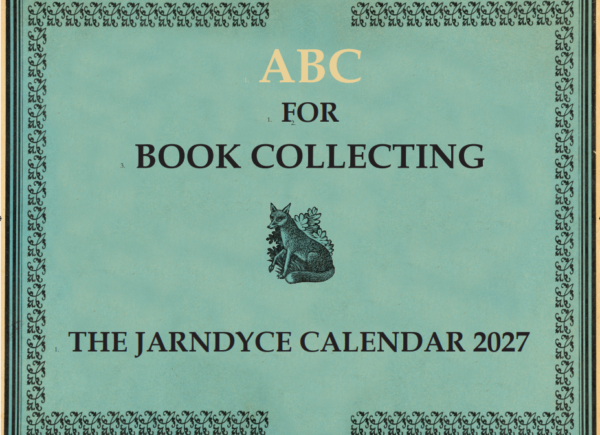
The Jarndyce Calendar 2027 celebrates the 75th anniversary of John Carter’s ABC for Book Collectors. We’ve interviewed Hester Malin to find out more about this beautiful tribute. How did…
2026 ABA National Book Collecting Prize Winner
6th November, 2026
The ABA announced at Chelsea that the 2026 ABA National Book Collecting Prize has been awarded to Eshan Kapoor for his collection India: A Category Unto Itself – Five Centuries…
Book Review: The Second Printing Revolution: Invention of Mass Media
30th October, 2026
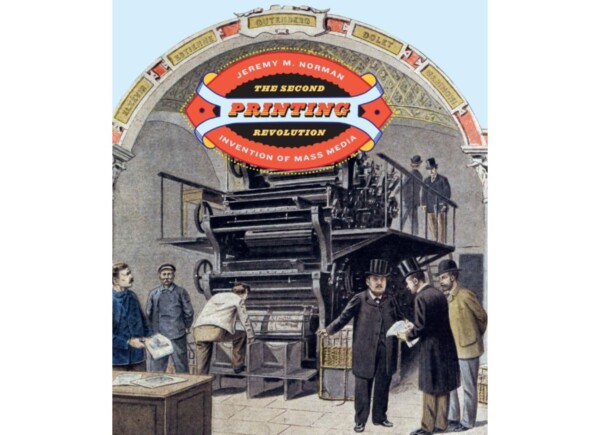
Paul W. Nash The Second Printing Revolution: Invention of Mass Media By Jeremy M. Norman (New York: The Grolier Club (and University of Chicago Press), 2026. xiii + 296 pp.,…
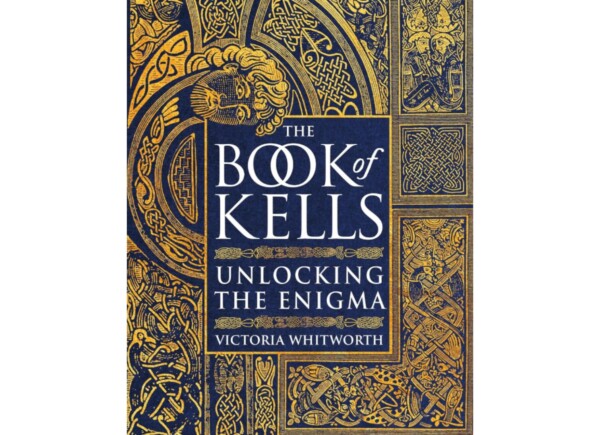
Book Review: The Book of Kells: Unlocking the Enigma
23rd October, 2026
Jeremy Knight The Book of Kells: Unlocking the Enigma By Victoria Whitworth (London: Head of Zeus, 2025. 336 pp., colour illus, £35. isbn 9781788541800) Reviewed in The Book Collector Autumn…
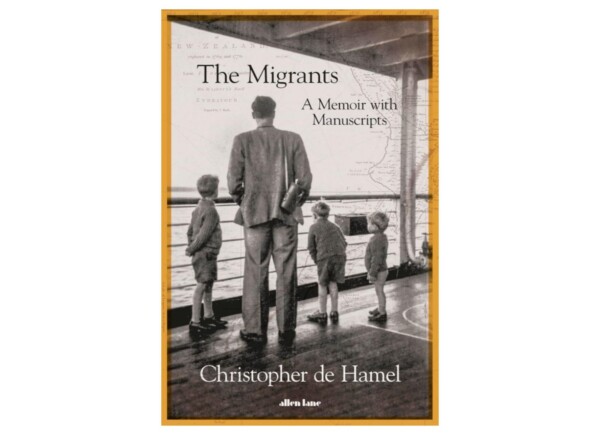
Book Review: The Migrants: A Memoir with Manuscripts
16th October, 2026
Sheila Markham The Migrants: A Memoir with Manuscripts By Christopher de Hamel (London: Allen Lane, 2026. 320 pp., 63 illus, £25. isbn 9780241670125) Anyone in the world of rare…
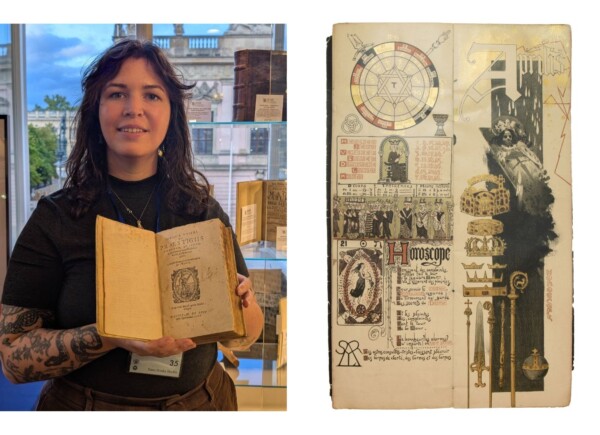
Interview with Clare Marshall and Simon Finch: Weirdiana Catalogue
9th October, 2026
Weirdiana, an exploration of witchcraft, the occult, the mystical and the “out there”, is a collaboration between Clare Marshall of Marshall Rare Books and Simon Finch of Voewood Rare Books….