


News
Book Review: The Second Printing Revolution: Invention of Mass Media
30th October, 2026
Paul W. Nash
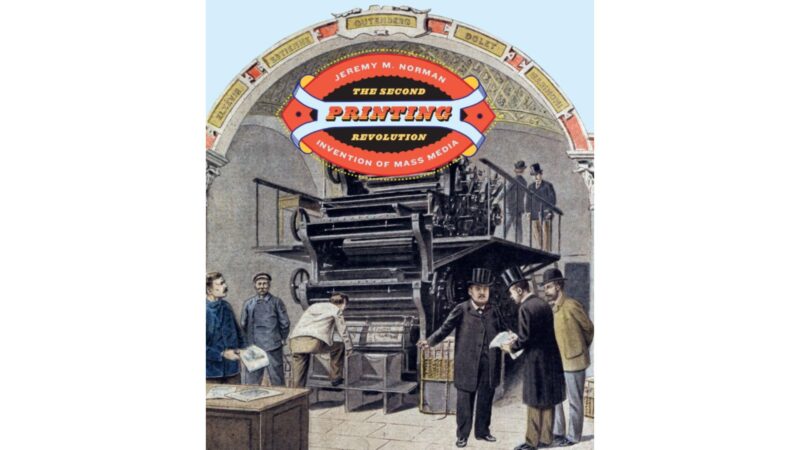
The Second Printing Revolution: Invention of Mass Media
By Jeremy M. Norman
(New York: The Grolier Club (and University of Chicago Press), 2026. xiii + 296 pp., many illus, $50.00. isbn 978-1-60583-126-8)
Reviewed in The Book Collector Autumn 2026 Issue
By ‘second printing revolution’ the author means the huge changes that came over the book-production industries in the period between the manufacture of the first successful iron hand-presses in the 1790s, and the rise and perfection of hot-metal typecasting before World War I. The ‘first revolution’ was the invention of printing with moveable type in Europe around 1450. And the third might perhaps be the contemporary transition from physical printing to electronic media, digitally typeset and printed books, and those publications which have no physical existence at all. Jeremy Norman’s book has closer links with this tertiary phase than might at first appear, since many of his words and images derive from his historyofinformation.com website. The book was published in conjunction with an exhibition held at the Grolier Club in early 2026 and still available in virtual form on the Club’s website. However, these two websites, and the exhibition, are hardly mentioned in the book under review. This seems a little disingenuous, and I wonder if the author and publisher wish to downplay the extent to which much of the material offered here is already available via the internet.
The story of the ‘second printing revolution’ is told in fourteen chapters, beginning with the invention of new machinery in the 18th century and continuing with a general account of the development of engineering in Britain in the early 19th. Then come chapters on mass print-media and associated methods of reproduction for imagery and text. A chapter on Dickens’s works and their printing/publishing is, perhaps, an aside, but I found it fascinating. Chapter nine deals with the printing revolution in North America, and ten with ‘The role of women’ in the period; the latter is a fair summary of the difficulties women experienced in trying to take professional roles in the printing industry. Then comes a discussion of mechanised typesetting, a subject the author admits is too large to be covered comprehensively; he concentrates on a few examples of typesetting machines, Linotype and Monotype. However, these last two were not, as Norman describes them, ‘mechanical typesetting machine[s]’ but typecasting machines that did away with typesetting entirely.
The following chapter concerns the mechanisation of bookbinding and the introduction of trade bindings. It owes a fair deal to an article by me, which the author acknowledges in generous terms. Chapters thirteen and fourteen cover the later phases of development in the industry and the mechanisation of newspaper production in America and Europe. A final ‘coda’ includes reflections by the author and some contemporary observers, and is followed by notes, a lengthy bibliography and a shortish index.
Overall, the book provides a readable summary of the ‘second revolution’. But there are some errors (often repeated from the author’s website) and obvious omissions. There is no mention, for example, of the French Revolutionary mass-production of assignats (paper money), which preceded the techniques invented to print British banknotes and postage stamps. The section on lithography is, perhaps, too brief and cursory, not reflecting the importance of the process and some of the technical innovations introduced. Although the focus of the book is on Europe, it is written from the perspective of an American bookseller and collector. Such a perspective should not be problematic, but there are moments when the author risks alienating some readers, as when he refers to the Royal Society being ‘the equivalent to our National Academy of Sciences’. Who is that ‘our’ intended to include, and who does it inadvertently exclude? The author sometimes describes his own copies of books mentioned in the text, including their condition or rarity, the relevance of which is not always obvious. He tends to use the terminology of the book trade, and some bibliographical expressions, such as ‘issue’ (which has a precise meaning), are misused. There is some confusion about the difference between woodcuts, wood-engravings and engravings, derived no doubt from the imprecise terminology of the period.
The author makes much use of patents, mostly British, which is a good approach, but the subject needs careful study as many published patents are obfuscatory or downright misleading. It seems counter-intuitive, but one cannot always take the technical information which appears in a patent as representing the work actually done by the patentee. In the present book, the patents for Tilloch’s stereotyping and Baxter’s colour process, for example, require a critical reading (this is true of many historical documents, of course, including Ben Franklin’s letter about lead poisoning which is quoted right at the beginning of the narrative).
In terms of production, the book has been lavishly illustrated and well-printed, in a large quarto format in printed paper covers. The overall design, with text in two columns, is effective, but I wonder if the type has been hyphenated by an algorithm; strange wordbreaks appear (England, mu-sic, ti-tle, etc) and a good many words are broken between columns and openings; some widows and orphans can also be spotted. The illustrations are mostly excellent, and although many can be found on the websites mentioned, there is real value in having them collected in this sequence and reproduced, often on a large scale, on good paper. Unfortunately the binding is of the ‘perfect’ variety, and some leaves have already become detached from my copy.
Buy book >
More News
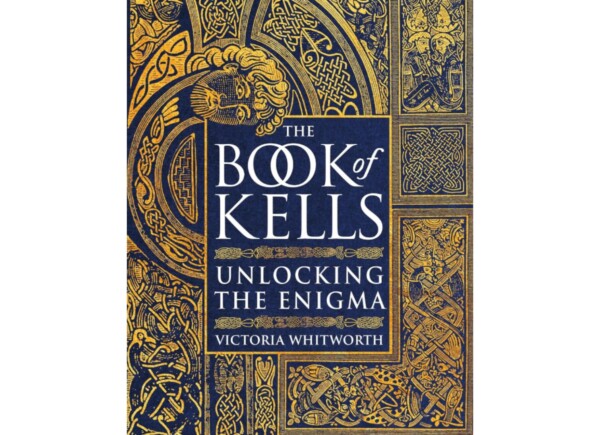
Book Review: The Book of Kells: Unlocking the Enigma
23rd October, 2026
Jeremy Knight The Book of Kells: Unlocking the Enigma By Victoria Whitworth (London: Head of Zeus, 2025. 336 pp., colour illus, £35. isbn 9781788541800) Reviewed in The Book Collector Autumn…

Book Review: The Migrants: A Memoir with Manuscripts
16th October, 2026
Sheila Markham The Migrants: A Memoir with Manuscripts By Christopher de Hamel (London: Allen Lane, 2026. 320 pp., 63 illus, £25. isbn 9780241670125) Anyone in the world of rare…
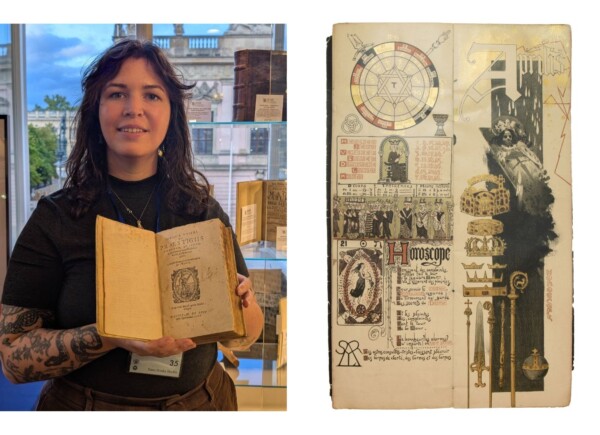
Interview with Clare Marshall and Simon Finch: Weirdiana Catalogue
9th October, 2026
Weirdiana, an exploration of witchcraft, the occult, the mystical and the “out there”, is a collaboration between Clare Marshall of Marshall Rare Books and Simon Finch of Voewood Rare Books….

Highlights from the ILAB Symposium 2026
7th October, 2026
The Book Collector team had a very enlightening time at the ILAB Symposium, which was filled with lots of interesting talks and great networking opportunities. The first half of the…
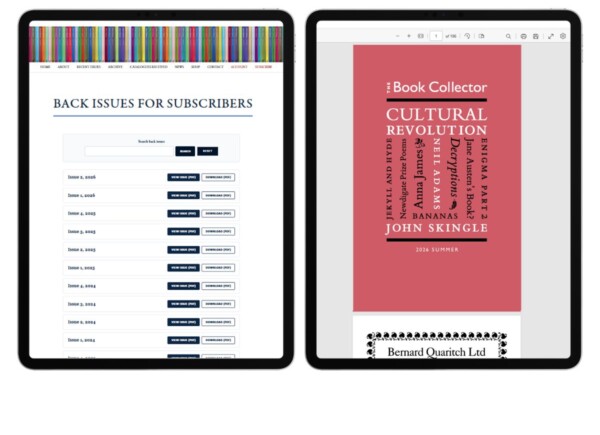
Back Issues: Your PDF Archive Is Back
7th September, 2026
We’re pleased to announce a new addition to your My Account area: Back Issues — giving subscribers simple access to PDF copies of every issue of The Book Collector, from 1947 to the present. When…
Important Notice: Fraudulent Website Impersonating The Book Collector
15th May, 2026
We have recently become aware of a fraudulent website operating under the domain: www.thebookcollectorjournal.co.uk This website has no affiliation whatsoever with The Book Collector, The Collector Ltd, or our editorial team. It appears to…