


News
Book Review: The Book of Kells: Unlocking the Enigma
23rd October, 2026
Jeremy Knight
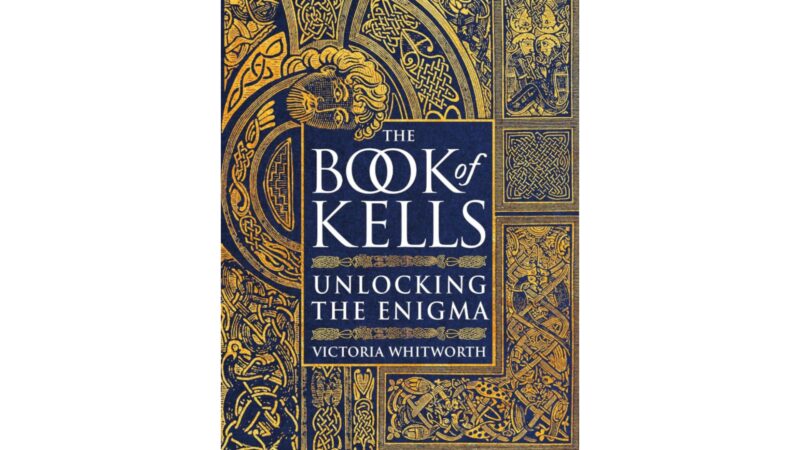
The Book of Kells: Unlocking the Enigma
By Victoria Whitworth
(London: Head of Zeus, 2025. 336 pp., colour illus, £35. isbn 9781788541800)
Reviewed in The Book Collector Autumn 2026 Issue
The Book of Kells, a 9th-century illuminated gospel manuscript, is a well-known treasure of Trinity College Dublin, much admired by tourists and much written about. Its scholarly literature is typically the preserve of palaeographers or bibliographers but several obvious candidates from that community, when invited to write this review, declined. What is it about this new book to cause such a reaction? The answers may lie in the fact that the author comes from a different professional background, and her well-reasoned hypotheses, if they are right, upend what we thought we knew about the Book of Kells.
Victoria Whitworth is an academic historian with research interests in Pictish, Anglo-Saxon and Norse stone sculpture; she is also a novelist. Her central claim is that similarities between the designs on Pictish sculptures from the Portmahomack monastery in north-east Scotland and those in the Book of Kells suggest that the manuscript may have been produced there rather than on the island of Iona, long considered to be its place of origin. She further points to recent archaeological discoveries of vellum production at Portmahomack as supporting evidence.
As if this were not enough controversy, she explores in greater depth the arguments put forward by Dr Donncha MacGabhann, who was awarded his PhD for research arguing that the Book of Kells was written mainly by one scribe working closely with a master practitioner of graphic design. Dr MacGabhann’s 2015 doctoral thesis is freely available online or can be purchased as an expensive hardback with a cheaper paperback coming out this year. Whitworth encourages the reader to read this and admits borrowing extensively from it. The preface is profusive in acknowledging the debt, thanking MacGabhann for his kindness, while acknowledging that he may disagree with her directions; it would be helpful to have a fuller account of where these disagreements might lie.
The book therefore brings together two new perspectives on the Book of Kells in a volume intended primarily for the non-specialist. The author adds her own take on those arguments, drawing on her expertise in sculpture and her readings of early texts and the bookish culture and practices of the time. Her book ends with a chapter on the Book of Kells’s afterlife, a broad overview which is perhaps more immediately readable after the detailed arguments.
An outsider’s perspective can be valuable, prompting fresh debate and reassessment. Might we be tearing down one old myth by creating a new one, based on circumstance and fortune? Iona as the site of production was chosen based on best guess arguments. We now know of a different site and can create a different story, but there is no proof, just a possibility and a desire for certainty. Is the paucity of concrete evidence always going to leave us with a degree of uncertainty, however unsatisfactory that is? We may need to live with all the theories side by side. What we have for sure is a remarkable manuscript and a remarkable archaeological site where we now know that vellum was being produced.
The greatest pleasure, and one of the author’s aims, is a closer look at the stunning illustration and design of The Book of Kells; she very much encourages us to look actively and notice things hidden in plain sight. There are numerous printed facsimiles available, and now a high-quality digital version of the whole thing is freely available online. This book helps us to train our eyes to see, describing the intricate designs and details with the expertise of someone deeply familiar with visual culture. We might or might not agree with her interpretations, but this book, by helping us see, reveals the true artistic wonder of The Book of Kells. That alone makes it worth purchasing.
Buy Book >
More News
Book Review: The Art of the Book: 75 Years of Thames & Hudson
13th November, 2026
Marcus E. Leaver The Art of the Book: 75 Years of Thames & Hudson With Introduction and Essays by Anna Nyburg (London: Thames & Hudson, 2026. 472 pp., illus, £65….
Interview with Hester Malin: The Jarndyce Calendar 2027
6th November, 2026
The Jarndyce Calendar 2027 celebrates the 75th anniversary of John Carter’s ABC for Book Collectors. We’ve interviewed Hester Malin to find out more about this beautiful tribute. How did…
Book Review: Too Good to Waste: Recycling Paper in the Eighteenth Century
6th November, 2026
Adam Smyth Too Good to Waste: Recycling Paper in the Eighteenth Century By Amélie Junqua and Geoffrey Day (Oxford: Bodleian Library Publishing, 2026. 480 pp., illus, £120. isbn 9781851246533) Reviewed…
2026 ABA National Book Collecting Prize Winner
6th November, 2026
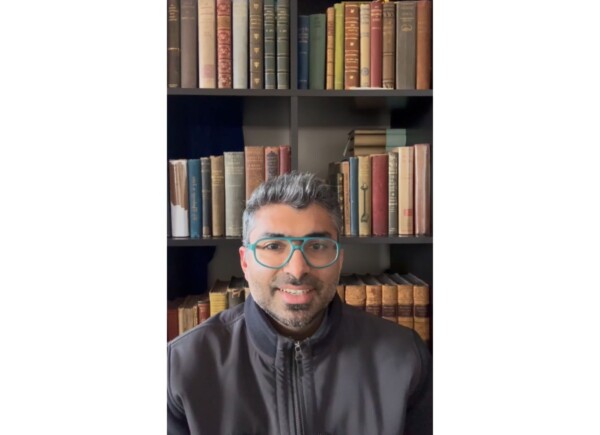
The ABA announced at Chelsea that the 2026 ABA National Book Collecting Prize has been awarded to Eshan Kapoor for his collection India: A Category Unto Itself – Five Centuries…
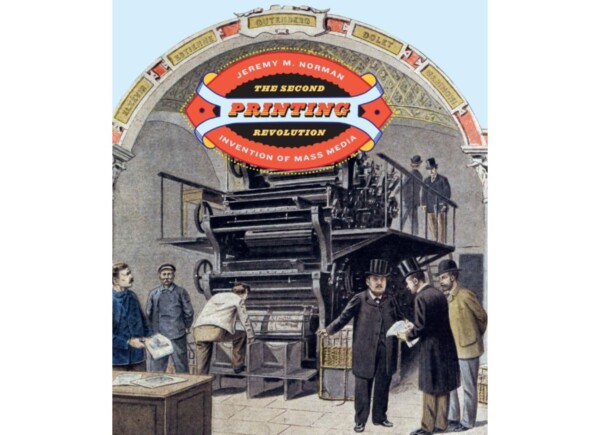
Book Review: The Second Printing Revolution: Invention of Mass Media
30th October, 2026
Paul W. Nash The Second Printing Revolution: Invention of Mass Media By Jeremy M. Norman (New York: The Grolier Club (and University of Chicago Press), 2026. xiii + 296 pp.,…

Book Review: The Migrants: A Memoir with Manuscripts
16th October, 2026
Sheila Markham The Migrants: A Memoir with Manuscripts By Christopher de Hamel (London: Allen Lane, 2026. 320 pp., 63 illus, £25. isbn 9780241670125) Anyone in the world of rare…