



News
Book Review: The Migrants: A Memoir with Manuscripts
9th October, 2026
Sheila Markham
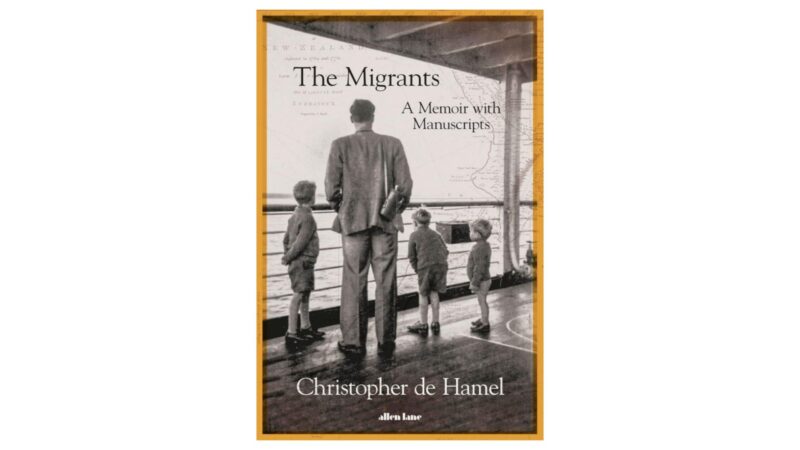
The Migrants: A Memoir with Manuscripts
By Christopher de Hamel
(London: Allen Lane, 2026. 320 pp., 63 illus, £25. isbn 9780241670125)
Anyone in the world of rare books and manuscripts will be familiar with the puzzled dinner party question, ‘What got you started on that?’ Christopher de Hamel’s book is not a conventional memoir, but a most eloquent answer to that question. It describes the making of a medievalist, and continues the stylistic device that worked so well in his Meetings with Remarkable Manuscripts and The Posthumous Papers of The Manuscripts Club. As both titles suggest, there is something companionable about de Hamel’s relationship with the reader as he introduces us to important medieval manuscripts and their collectors. The Migrants gives the same impression of a series of interviews and the circumstances in which they took place. It’s no surprise to learn that Meetings was intended to be called Interviews with Manuscripts. Although it would have served just as well as a title for the present work, the choice of The Migrants brilliantly conveys the author’s concern with people and manuscripts on the move.
Christopher de Hamel’s family moved from London to New Zealand when he was four years old. His memoir covers the period from 1955 to 1972, when he returned to England to continue his education. We learn nothing of his illustrious career at Sotheby’s and Cambridge University, nor are we given information on his numerous publications and book prizes, his membership of the Roxburghe Club and honorary degrees and fellowships. You can read as much – in fact more – in Who’s Who. The great value of de Hamel’s youthful memoir is the unique insight that it provides into his preparation for a lifetime of achievement in his field.
A consummate storyteller, de Hamel makes the most of New Zealand as the unexpected setting for his first encounter with manuscripts. A migrant amongst migrants, he observes that every medieval manuscript to be found there had travelled the furthest distance possible from Europe. The de Hamel family settled in Dunedin, the seat of the oldest university in New Zealand, founded in 1869. It was in the Dunedin Public Library in 1963 that de Hamel met his first medieval manuscript. He was thirteen at the time, and regards that visit as the moment when his entire life was transformed. The rare book collection was largely donated by A. H. Reed (1875–1975), bookseller, publisher, writer and philanthropist, and included a single leaf from a Gutenberg Bible, then the only example in New Zealand, bought in 1954 for £175.
Already a keen stamp and coin collector, the teenage de Hamel set about acquiring knowledge of his new passion by reading the Reverend David Mortimer Taylor’s The Oldest Manuscripts in New Zealand, published by the New Zealand Council for Educational Research, Wellington, 1955. The book describes Taylor’s travels through the provinces of Otago, Canterbury, Wellington and Auckland, describing the medieval manuscripts that he was able to find. The book clearly made a deep impression on de Hamel as its conversational style, the sense of wonderment and knowledge worn lightly, conveyed in the guise of a tutorial journey, are all present in his own writing. Incidentally I can’t be the only reader who regards de Hamel as a latter-day Thomas Frognal Dibdin, who made a famous bibliographical tour of France and Germany in 1818–19. Although de Hamel’s scholarship is infinitely more reliable, he shares Dibdin’s enthusiasm and the ability to impart something of the thrill of the chase, physical as well as intellectual. ‘Bring your car to meet me off the Eurostar in Lille and we will drive across France together’ needs only slight adjustment to have been written by Dibdin.
This ability to bring readers along for the ride is particularly obvious in de Hamel’s description of his Grand Tour, as he refers to his visit to the States and Europe in 1966. Travelling with his older brother, the teenage boys flew from Auckland to Los Angeles, and from New York to London and back to New Zealand via the Mediterranean, Hong Kong and Sydney. The description of his time in London includes a fascinating snapshot of some of the leading figures in the rare book trade. It was by any standards an intense encounter with the treasures of the past – from the Ellesmere Chaucer in the Huntington Library to the ruins of the palace of Knossos – and convinced de Hamel that he would be returning to Britain and an antiquarian life as soon as it could be managed.
Back in New Zealand, he set about achieving his goal in methodical fashion by writing to dealers in England to say that he was interested in buying manuscript fragments. Bernard Breslauer had no time for enquiries from a schoolboy, but other dealers were happy to encourage him, and he was able to spend his pocket money with the likes of Clifford Maggs and Alan Thomas, who became a lifelong friend. Picking apricots and repairing old brake shoes were some of the odd jobs that helped to supplement his pocket money, and two blissful summer holidays were spent in the Turnbull Library in Auckland, where de Hamel was looked after by the Head of Manuscripts, Margaret Scott, the only person in the world who could read Katherine Mansfield’s handwriting. Any free time was spent following in the Reverend Taylor’s footsteps, looking at manuscripts in other New Zealand collections.
By the time de Hamel became a student at Knox College in Dunedin, he had enough framed manuscripts to decorate his room, in which he had painted the window to resemble medieval stained glass. After Knox College, he spent three years at the University of Otago, where the Dark Age of Germania was the only subject of medieval interest on the curriculum. He graduated in 1971 with a degree in History, and was back in England the following year to do postgraduate work at Oxford, and to embark on his dream of an antiquarian life.
We have reached the end of the book, but Christopher is still only twenty-two, and has yet to preside over record-breaking sales for Sotheby’s, or serve as the Donnelley Fellow Librarian of the Parker Library at Corpus Christi College. Readers will surely expect another volume of the manuscripts roadshow.
Buy Book >
More News
Interview with Clare Marshall and Simon Finch: Weirdiana Catalogue
9th October, 2026
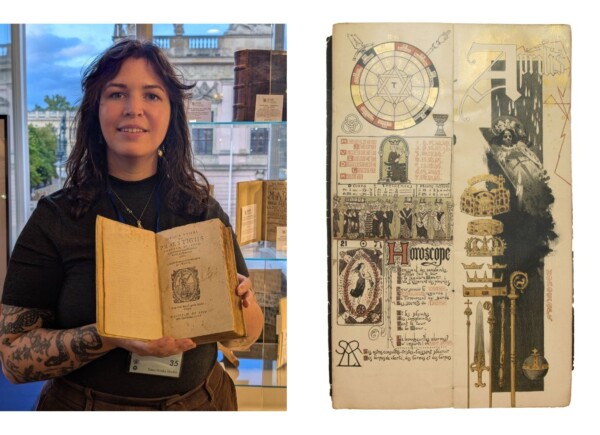
Weirdiana, an exploration of witchcraft, the occult, the mystical and the “out there”, is a collaboration between Clare Marshall of Marshall Rare Books and Simon Finch of Voewood Rare Books….
Back Issues: Your PDF Archive Is Back
7th September, 2026
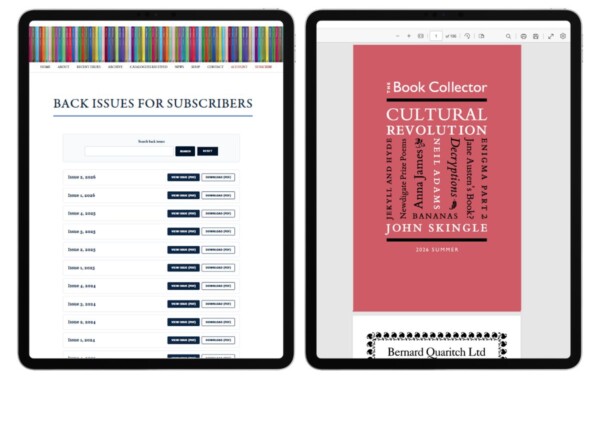
We’re pleased to announce a new addition to your My Account area: Back Issues — giving subscribers simple access to PDF copies of every issue of The Book Collector, from 1947 to the present. When…
Important Notice: Fraudulent Website Impersonating The Book Collector
15th May, 2026
We have recently become aware of a fraudulent website operating under the domain: www.thebookcollectorjournal.co.uk This website has no affiliation whatsoever with The Book Collector, The Collector Ltd, or our editorial team. It appears to…
Interview with Gordon Brough
10th April, 2026
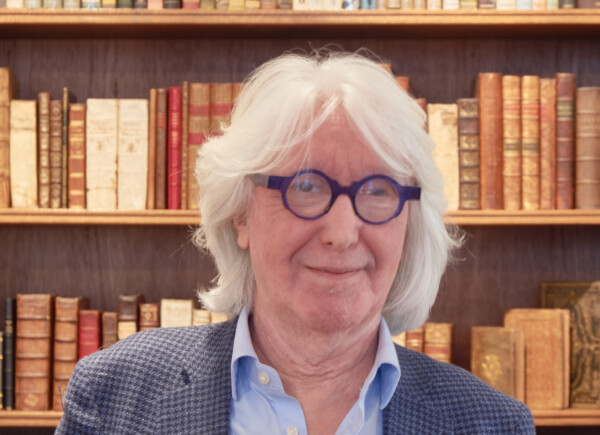
Gordon Brough is chairman of Sotheran’s. He was born in Dunfermline but brought up in Dundee. He is a collector turned bookseller. When did you come to London? I…
To the Last Scratch of Ink
13th March, 2026
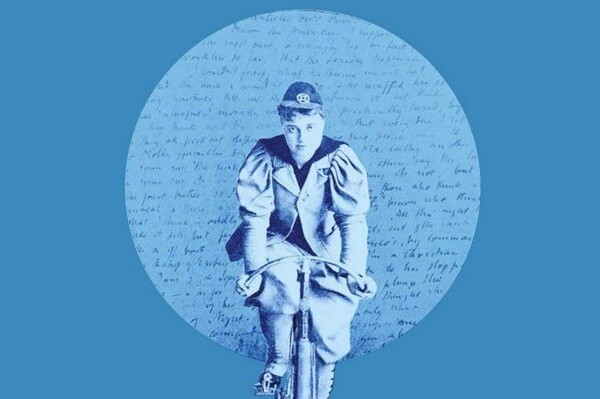
Just in time for International Women’s Month, Peter Harrington have published “To the last scratch of ink”: The Lives and Literature of Women. This catalogue is the third in a…
Spring has Sprung
6th March, 2026
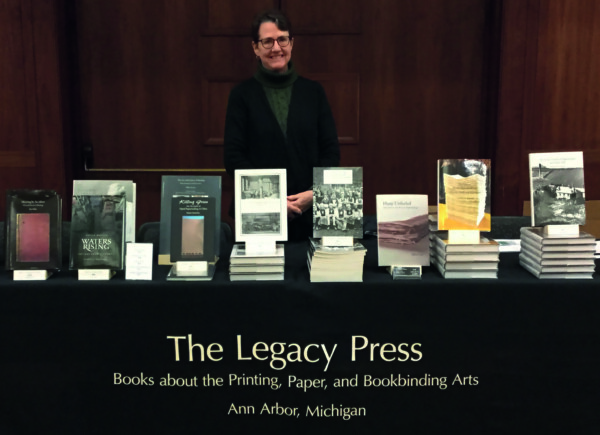
Our Spring 2026 issue has just been published with a suitably daffodil-yellow cover containing a wealth of good things. Cathleen Baker chronicles the story of The Legacy Press, her unique…