


News
Book Review: The Art of the Book: 75 Years of Thames & Hudson
13th November, 2026
Marcus E. Leaver
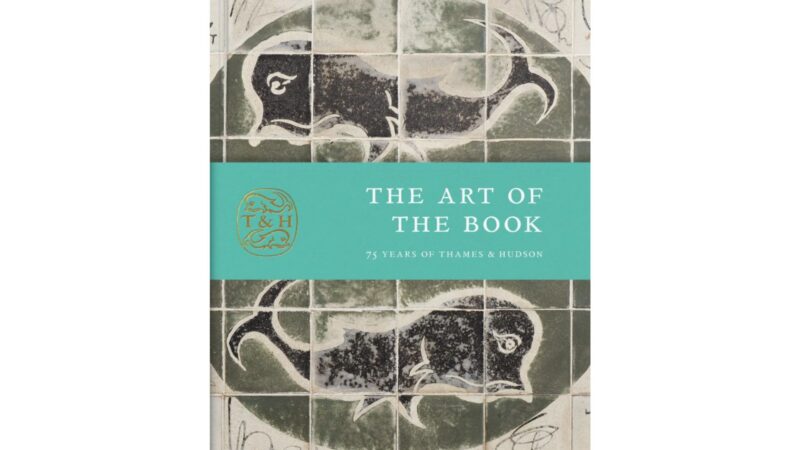
The Art of the Book: 75 Years of Thames & Hudson
With Introduction and Essays by Anna Nyburg
(London: Thames & Hudson, 2026. 472 pp., illus, £65. isbn 9780500028063)
Reviewed in The Book Collector Autumn 2026 Issue
House histories are a treacherous genre, and illustrated house histories doubly so. The Art of the Book, marking seventy-five years of Thames & Hudson, must function simultaneously as a commemorative object, exemplar of the firm’s craft and account of how that craft came to be. It largely succeeds at the first two. The third is harder, and the volume’s handling of it reveals as much about the conventions of the form as about the publisher it celebrates.
The volume was shaped by Thomas Neurath, son of one of the company’s founders and Managing Director and Publisher from 1967 to 2005. He did not live to see the publication, and an in-house team, assisted by Anna Nyburg, brought the book to life. Nyburg is an honorary lecturer at Imperial College London and the author of Émigrés: The Transformation of Art Publishing in Britain (2014), the standard scholarly account of the refugee publishers who reshaped the British illustrated book in the postwar decades. The introduction and three chronological essays carry the narrative from the firm’s Viennese prehistory through Walter and Eva Neurath’s founding of Thames & Hudson in 1949, the generational handover of the 1960s, and into the present. Around this spine, the book arranges pictorial spreads drawn from across the list – art, archaeology, design, photography – produced to the standard one would expect from the firm itself.
The case constructed in the tome is one of remarkable continuity. The Neuraths’ founding ambition – a ‘museum without walls’, a phrase the volume returns to repeatedly – is presented as the through-line connecting a Viennese refugee enterprise of the late 1940s to a global illustrated publisher of the 2020s. The three chronological essays trace adaptations in scale, technology and partnership, but the underlying proposition is stable: that Thames & Hudson has remained, across three quarters of a century and two changes of generation, the firm its founders meant it to be. The pictorial spreads are calibrated to reinforce this reading. Books from across the decades are presented as variations on a settled house aesthetic rather than as evidence of strategic adjustment to a changing trade. The story, in short, is one of fidelity.
The volume’s principal achievement is the seriousness Nyburg brings to it. Émigrés established her as the most careful historian working on refugee art publishers, and the discipline of that earlier book is visible here in the handling of the firm’s beginnings in Vienna and the Neuraths’ early London years, where the temptation to mythologise is greatest, yet has been resisted. The pictorial programme is the other strength, and a real one with 1,800 illustrations, with series laid out on the page like Britain in Pictures or The World of Art but there is joy also in seeing sales catalogues represented. The reproductions themselves are an argument about the firm’s standards, and that argument is, on this evidence, well-founded.
What the volume gains in fidelity, it loses in perspective. Nyburg’s own Émigrés situated Thames & Hudson within a cohort – Phaidon, Adprint, Lund Humphries, the constellation of refugee enterprises that together remade illustrated publishing in Britain – and read the firm’s achievements as inseparable from that wider transformation. The house history, by its nature, cannot do this, and the loss is significant. The Neuraths appear here as founders and visionaries rather than figures formed by the specific conditions of Central European displacement and the specific economics of postwar co-edition publishing. The change of management on Walter Neurath’s death is narrated as familial continuity – Thomas Neurath succeeding his father as managing director – rather than as the more interesting structural fact it represents: that Thames & Hudson is among the very few émigré-founded illustrated publishers to have stayed out of the conglomerate absorptions that consumed Hamlyn, Deutsch, Weidenfeld and eventually Phaidon. How that independence was preserved, and at what cost, is the question the volume leaves unasked.
The Art of the Book is, on its own terms, a success: a handsome, scholarly and self-aware account of a firm that has earned the right to commemorate itself. It will sit usefully on the reference shelf beside Nyburg’s Émigrés, the two volumes in productive tension. What it leaves unwritten is the comparative history of the émigré publishers as a cohort – the structural account in which Thames & Hudson is one chapter, not the whole story.
More News
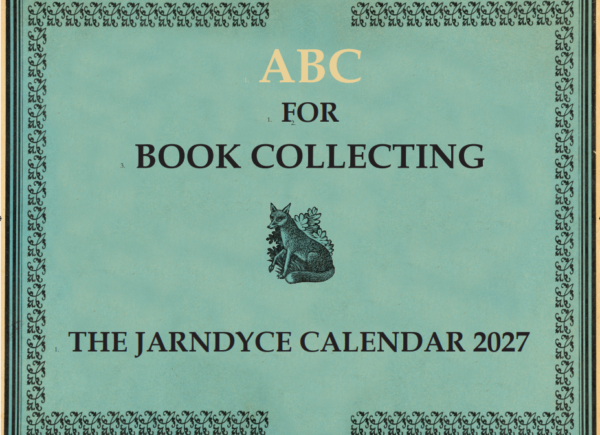
Interview with Hester Malin: The Jarndyce Calendar 2027
6th November, 2026
The Jarndyce Calendar 2027 celebrates the 75th anniversary of John Carter’s ABC for Book Collectors. We’ve interviewed Hester Malin to find out more about this beautiful tribute. How did…
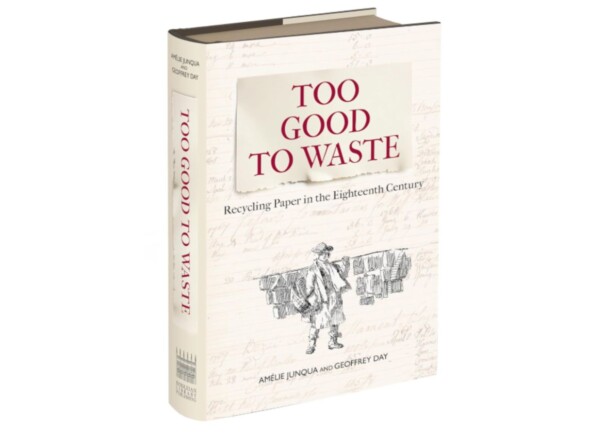
Book Review: Too Good to Waste: Recycling Paper in the Eighteenth Century
6th November, 2026
Adam Smyth Too Good to Waste: Recycling Paper in the Eighteenth Century By Amélie Junqua and Geoffrey Day (Oxford: Bodleian Library Publishing, 2026. 480 pp., illus, £120. isbn 9781851246533) Reviewed…
2026 ABA National Book Collecting Prize Winner
6th November, 2026
The ABA announced at Chelsea that the 2026 ABA National Book Collecting Prize has been awarded to Eshan Kapoor for his collection India: A Category Unto Itself – Five Centuries…
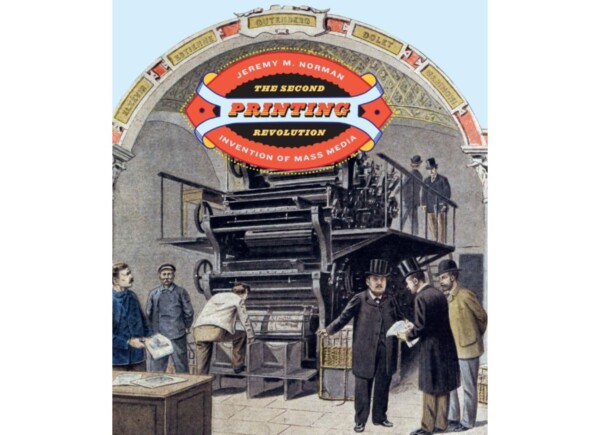
Book Review: The Second Printing Revolution: Invention of Mass Media
30th October, 2026
Paul W. Nash The Second Printing Revolution: Invention of Mass Media By Jeremy M. Norman (New York: The Grolier Club (and University of Chicago Press), 2026. xiii + 296 pp.,…
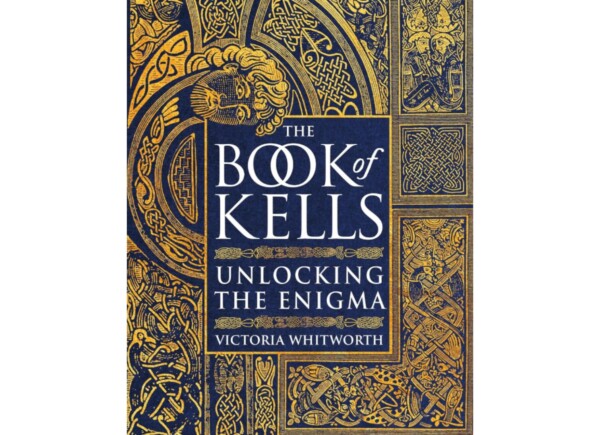
Book Review: The Book of Kells: Unlocking the Enigma
23rd October, 2026
Jeremy Knight The Book of Kells: Unlocking the Enigma By Victoria Whitworth (London: Head of Zeus, 2025. 336 pp., colour illus, £35. isbn 9781788541800) Reviewed in The Book Collector Autumn…
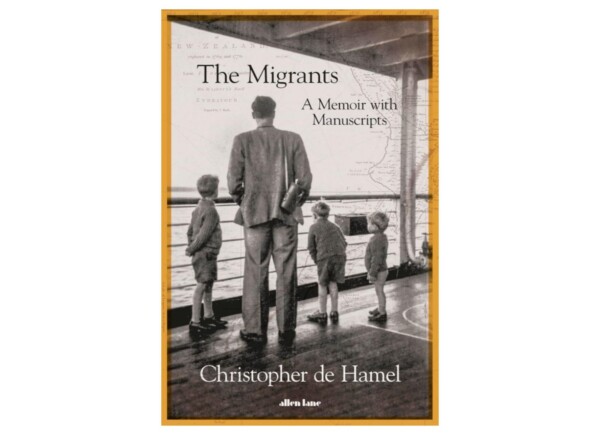
Book Review: The Migrants: A Memoir with Manuscripts
16th October, 2026
Sheila Markham The Migrants: A Memoir with Manuscripts By Christopher de Hamel (London: Allen Lane, 2026. 320 pp., 63 illus, £25. isbn 9780241670125) Anyone in the world of rare…