


News
Interview with Hester Malin: The Jarndyce Calendar 2027
6th November, 2026
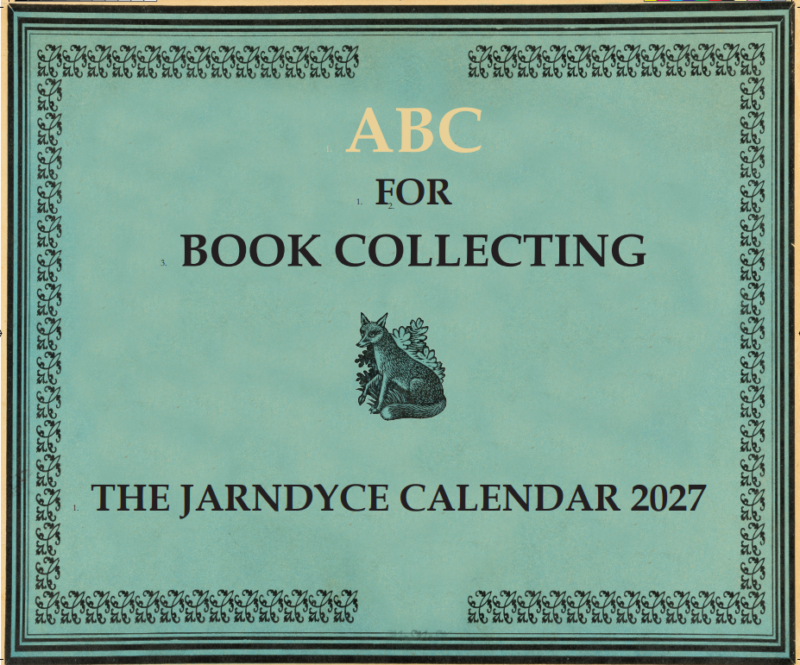
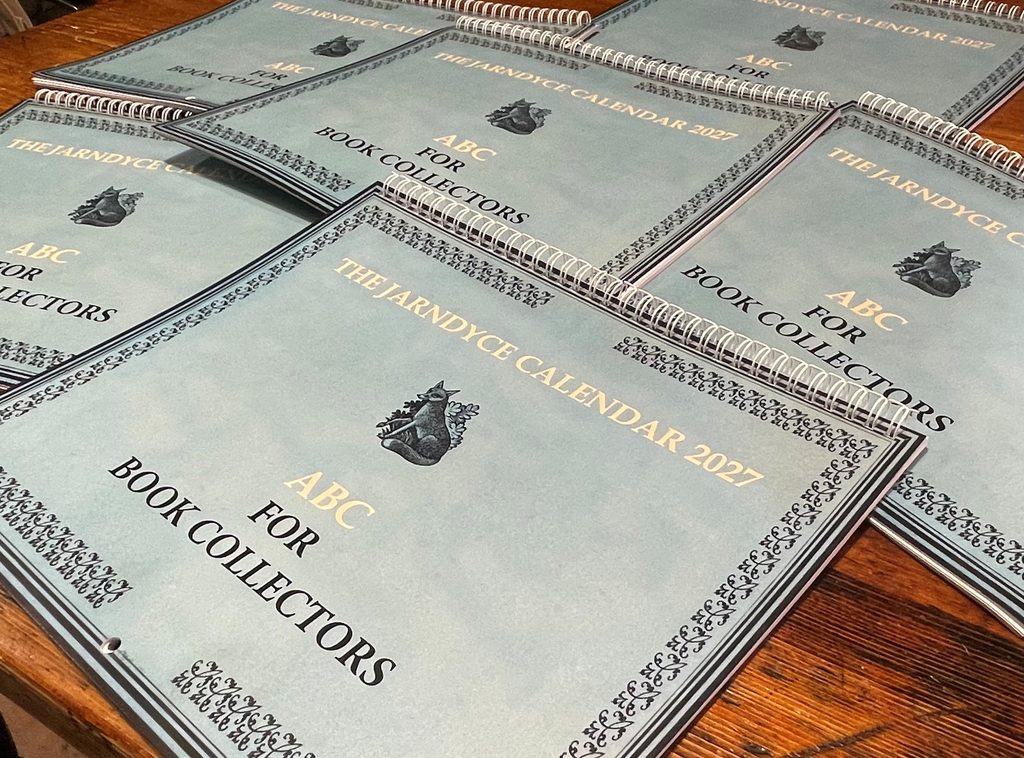
The Jarndyce Calendar 2027 celebrates the 75th anniversary of John Carter’s ABC for Book Collectors. We’ve interviewed Hester Malin to find out more about this beautiful tribute.
How did you come up with the idea for this anniversary edition calendar?
We wanted to do the calendar differently this year, and landed on something with an educational slant. Many fledgling booksellers are given a copy of Carter’s ABC when starting out; it has become something of an emblem of initiation into the trade. So when my colleague Jessica Starr pointed out that next year was the 75th anniversary of its first publication, it seemed like happy providence. It’s very much a group effort with Jess and I designing it, Ed mocking it up, and Dan taking the lovely pictures.
Each month is represented by two letters, and you beautifully photographed stock from Jarndyce. Which letter was the easiest to find the perfect illustration for?
Books with dust-jackets are certainly photogenic, so the hardest part of that month was choosing which one to illustrate. Paul, Jarndyce’s 20th-century specialist, helped with that one. He has a knack for nosing out brilliantly obscure books with striking jackets.
Which one was the most difficult one to match?
Turns out there aren’t a huge number of book-related words beginning with X, but once we landed on X-rated (n.b. not in Carter), we had fun deciding what to choose. There’s a certain shelf in the Jarndyce cellar that had some other interesting options… The 1830s broadside which we went for in the end is remarkable: it is a rare bawdy slip-song, recording the exploits of ‘Country John’, and though slightly too X-rated to include the details here, it is a fascinating historical remnant of social history and sex work.
Tell us a bit more about the broadside illustrating March, please.
An execution broadside is essentially a newspaper story on a single sheet: it details the crime, trial and, usually, the execution of a criminal. This particular one from 1816 tells the stories of two people, John Williams and Dinah Riddiford. Williams was just 22 when he was hanged. He had first been caught stealing a velveteen jacket and was then caught breaking into a house to steal clothes – evidently a man with fine sartorial tastes. The same broadside records the trial of Dinah Riddiford, who was 69, and apparently the oldest woman to have been executed in England during the 19th or 20th centuries. Curiously, the Riddifords were also the ancestors of Australian pop sisters Kylie and Danie Minogue. Dinah’s crimes were to harbour her son Luke and conceal the bacon and butter he had stolen. Though clearly the acts of a desperate mother, she was hanged.
There’s something quite chilling about these broadsides because, however different the circumstances, they all end in the same way. But they’re also very human: behind the crime and punishment are two real people, and these little bits of paper preserve at least something of their story. They’re not really macabre; they can be quite moving, actually.
April shows Elizabeth Meeke’s Anecdotes of the Altamont Family as a perfect example of a beautiful half-calf. Tell us more about the author and her popularity.
Meeke was a Minerva Press doyenne – her career as a novelist was closely tied to the Press, and she became one of its most prolific contributors. Her first novel appeared in 1795, and she went on to write for them for nearly three decades, producing a further 26 novels for the circulating-library market.
What’s particularly interesting is that she was also surprisingly elusive. Some of her books appeared as ‘Mrs Meeke’, others anonymously, and six under the pseudonym Gabrielli. It wasn’t until 2013 that she was conclusively identified as Elizabeth Meeke, 1761–1826, the daughter of merchant Stephen Allen and the stepsister of Frances Burney.
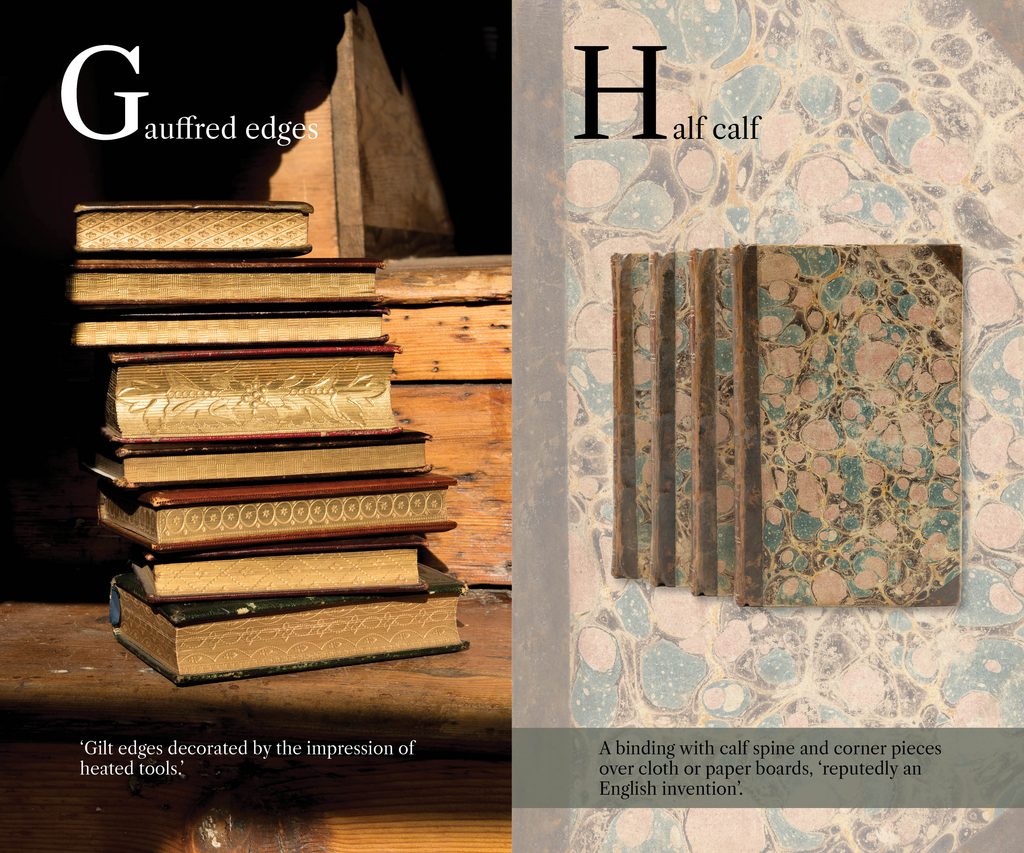
My absolute favourite photo is the one of the gauffered edges – please tell us a bit more about the books.
For ‘G’ we were torn between ‘Grangerised’ and ‘Gauffered edge’, but after seeing them catching the light like that, I’m glad we went for the latter. Dan, our brilliant photographer, spotted the sun coming out one morning, so we scampered upstairs and took advantage of it while we could.
The books are from our working collection of original publisher’s bindings – one of the long-term projects destined to become a Jarndyce catalogue. Original publisher’s leather bindings are usually extravagant and highly gilt. They can sometimes be quite gaudy, but I love them for it: they represent a willingness to spend lavishly on books. That kind of indulgence in the material book by trade publishers is rather uncommon these days.
This weekend is very much ‘fireworks weekend’, so I was pleased to see your ‘Chapbook’ illustration. Please share a bit of what it shows and how easy it is to find similar chapbooks.
Chapbooks are ephemeral by nature – cheap little books bought to be used rather than treasured – so the more niche the subject, the rarer they are. Fireworks are especially so:
some chapbooks contain recipes and instructions for pyrotechnics, so they’re fascinating as early records of practical chemistry. It helps that they also lend themselves well to fantastic, coloured illustrations.
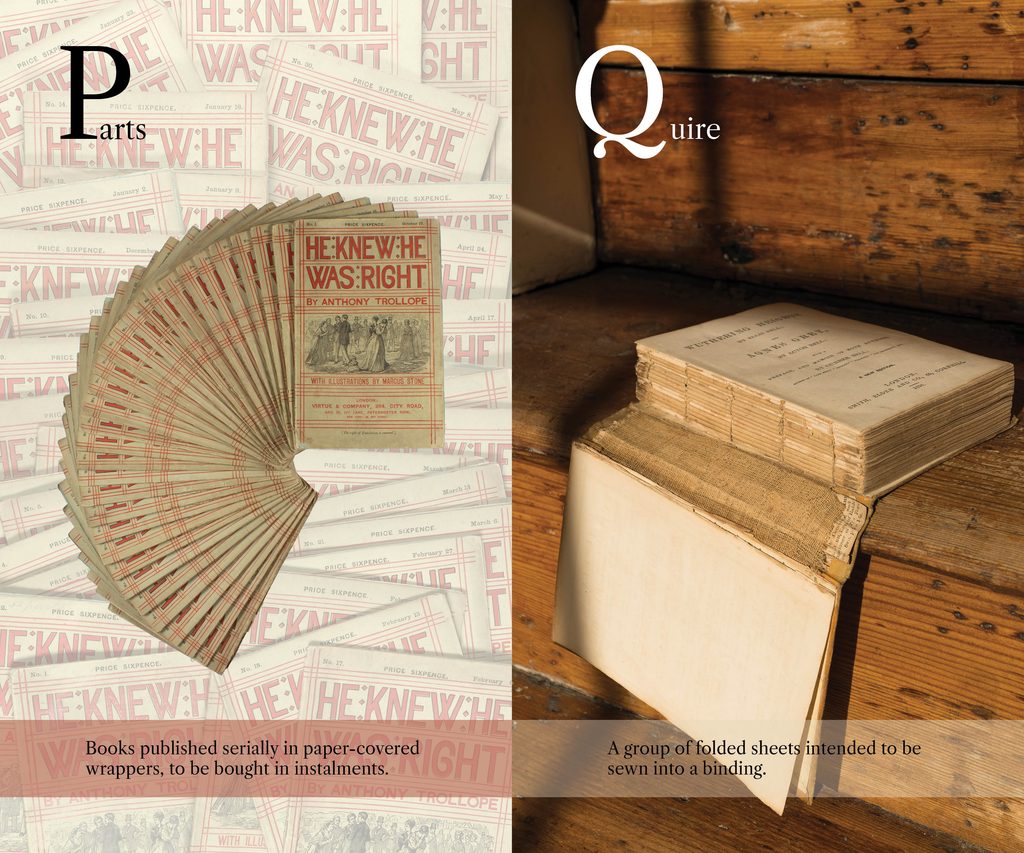
How rare is it to be able to sell a complete set of Anthony Trollope’s He Knew He Was Right? Do you have other ‘parts’ by other authors at the moment?
It is scarce. Jarndyce have been dealing with Trollope material for a long time, and we haven’t handled a set for at least twenty-five years. Like chapbooks, novel parts were cheap printings in wrappers and would fall apart quite easily after reading. This copy is in particularly good condition, though. It is remarkably intact and still retains that striking bright red on the wrappers.
Works as they were originally published are what Jarndyce specialise in, and parts are no exception. Dickens’s novels were famously issued in parts, and we have a whole wall of shelves filled with them here in the Dickens room. They’re due to feature in our next Dickens catalogue, coming out in 2027. I must find our copy of Hatton and Clever and get on with them really…
Some of the illustrated works seem to be on loan, but are the others still available to buy in time for Christmas?
Apart from a few items which have sold, and Brian and Janet’s Scrabble book which has been safely returned to their living room, all the items are available to buy. Imagine your loved one opening a present beside the yuletide fire and peering inside to reveal an unrecorded letter from Charles Dickens [U/October]. Now that would be a good Christmas.
Buy your copy of the Jarndyce calendar 2027 here >
More News
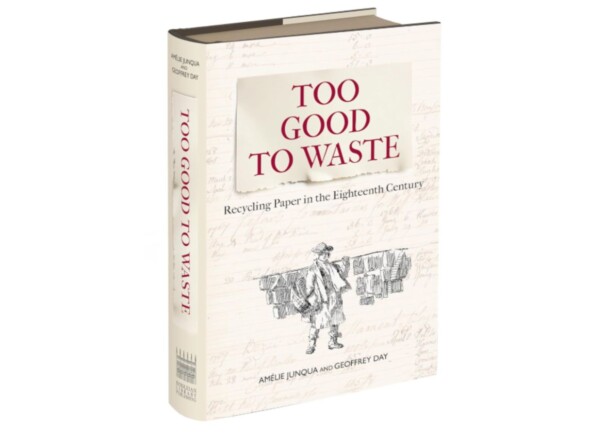
Book Review: Too Good to Waste: Recycling Paper in the Eighteenth Century
6th November, 2026
Adam Smyth Too Good to Waste: Recycling Paper in the Eighteenth Century By Amélie Junqua and Geoffrey Day (Oxford: Bodleian Library Publishing, 2026. 480 pp., illus, £120. isbn 9781851246533) Reviewed…
2026 ABA National Book Collecting Prize Winner
6th November, 2026
The ABA announced at Chelsea that the 2026 ABA National Book Collecting Prize has been awarded to Eshan Kapoor for his collection India: A Category Unto Itself – Five Centuries…
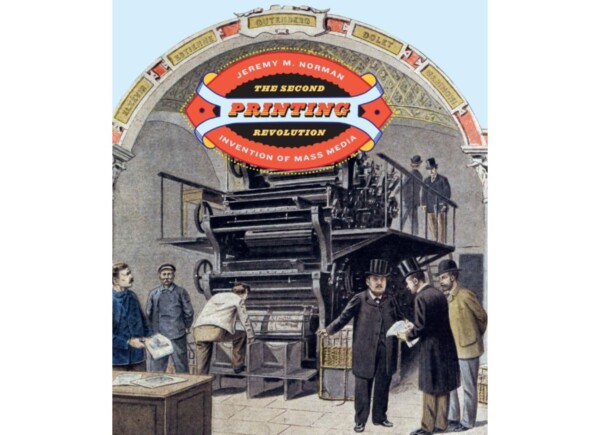
Book Review: The Second Printing Revolution: Invention of Mass Media
30th October, 2026
Paul W. Nash The Second Printing Revolution: Invention of Mass Media By Jeremy M. Norman (New York: The Grolier Club (and University of Chicago Press), 2026. xiii + 296 pp.,…
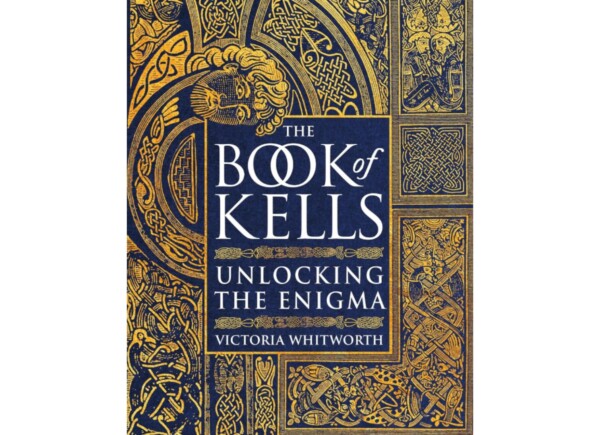
Book Review: The Book of Kells: Unlocking the Enigma
23rd October, 2026
Jeremy Knight The Book of Kells: Unlocking the Enigma By Victoria Whitworth (London: Head of Zeus, 2025. 336 pp., colour illus, £35. isbn 9781788541800) Reviewed in The Book Collector Autumn…

Book Review: The Migrants: A Memoir with Manuscripts
16th October, 2026
Sheila Markham The Migrants: A Memoir with Manuscripts By Christopher de Hamel (London: Allen Lane, 2026. 320 pp., 63 illus, £25. isbn 9780241670125) Anyone in the world of rare…
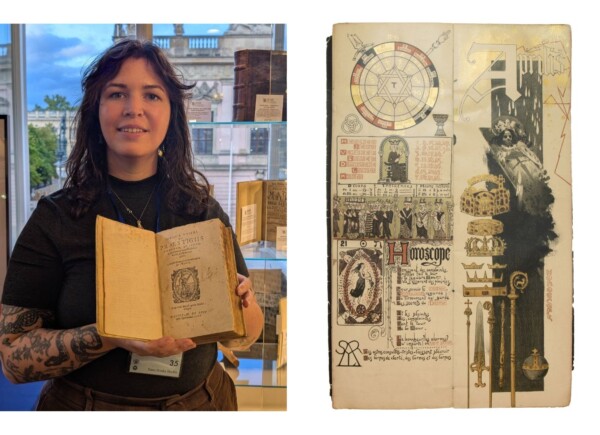
Interview with Clare Marshall and Simon Finch: Weirdiana Catalogue
9th October, 2026
Weirdiana, an exploration of witchcraft, the occult, the mystical and the “out there”, is a collaboration between Clare Marshall of Marshall Rare Books and Simon Finch of Voewood Rare Books….