



News
Catalogue Interview: Gothic Imagination
Interview with Bonny Beaumont
7th February, 2023
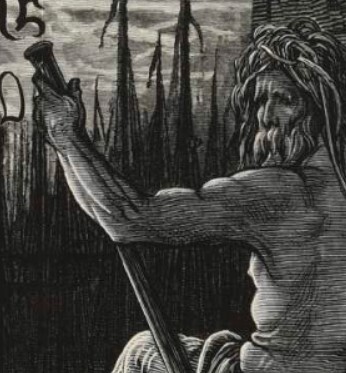
This week, we talked to Bonny Beaumont about her recent Gothic catalogue for Maggs Bros. ‘The Gothic Imagination’ is a collection of Gothic and Romantic literature from the library of Richard Franklin, supplemented with recent additions to stock. The collection represents a broad understanding of the Gothic and reflects Franklin’s scholarly reading habits.
‘The Gothic Imagination’ is your latest catalogue – has Gothic literature always fascinated you? How did you get interested in it?
My enthusiasm for Gothic literature was sparked at school. I had a very passionate English teacher who really stoked the flames for me and was also responsible for sparking my love for Kate Bush. We started with Angela Carter’s Gothic retellings of fairy tales in The Bloody Chamber, and I soon moved on to classic novels like Frankenstein and Dracula. Later I read The Castle of Otranto and The Monk by Matthew Lewis. I found them to be both enthralling and slightly ridiculous, which resonated with my sense of humour. It was a subject I was then able to explore further at university, where again I had an excellent teacher who encouraged exploration of the genre.
The catalogue includes books from the library of Richard Franklin, he sounds fascinating – tell us a bit more about him please!
Richard Franklin was an important molecular biologist. He worked initially from his laboratory in New York (which was among the pioneers of molecular research into viruses), and later at the Biozentrum in the University of Basel, of which he was a founder. His collection represented his broad scholarly reading habits, some of the books we came across when initially looking through the collection didn’t seem to naturally fit, but after doing a little research you realise that everything had a place and special meaning in the wider context of the collection. There were obvious things like Edmund Burke’s treatise on the sublime, which is often cited as an important influence on the Gothic genre. But there were also things in there that could have been missed, like some nineteenth century travel books which formed part of the source material for Dracula.
Tell us a bit more about why you included some source material by prominent writers associated with the Gothic tradition.
I’m sure in some ways it seems slightly counter intuitive to include a travel book in a Gothic literature catalogue, but I do think it’s interesting to think about these books within their context, and to look at where some of their influences are rooted. Bram Stoker had never been to Transylvania, and so when working on Dracula, he relied heavily on the travel writings of people who had. The London Library still has many of the actual copies of the books that Stoker would have been reading when writing the novel, and Stoker’s preliminary notes were transcribed and published in 2008. They show clear links between his reading of source material and writing of the text. There are other examples of this in the catalogue, but this is probably the most well documented.
One of the highlights is of course a third edition of Mary Shelley’s Frankenstein – please explain why and tell us a bit about the associated material and the other works by her as they all fit so nicely together. Were they part of the collection, or did you add those?
The story behind the writing and publication of Frankenstein is such an interesting tale, and one I’m sure many people are already aware of. Briefly, it all began on a stormy night in Geneva as a competition between Lord Byron, Polidori, and Percy and Mary Shelley to see who could write the best horror story. The third edition of Frankenstein (included in the catalogue) contains a preface in which Mary Shelley provided an account of the origin of the story for the first time. It is also the final authorised version of the text, having been newly edited by Shelley for this publication, and it is the first edition to be illustrated.
Franklin had collected all these Keepsakes which include first appearances of many other of Mary Shelley’s stories, but he also had the program of an early theatrical production of Frankenstein at the Gaiety Theatre. It is described as a burlesque extravaganza and was a musical. It starred Nellie Farren in a breeches role as Dr Frankenstein, and was the first Frankenstein adaptation to feature Vampires, bringing together Shelley and Polidori’s creations on stage. I added a rare printing of the sheet music for one of the songs in that production, which is an interesting survival as the full script of the adaptation has never been printed.
I also added the first appearance in print of the very first dramatic adaptation of Frankenstein, which was first performed in 1823 and sparked interest in the publication of a second edition of the novel. That adaptation also includes the first appearance of the phrase “It lives!”, which is later famously echoed in the Boris Karloff 1931 cinematic adaptation.
What other gems of Gothic literature gems have you rediscovered?
There were lots of fantastic books in the collection, but it was nice to see Ann Radcliffe well represented, who I think can be slightly overlooked sometimes. Her approach to the Gothic genre was quite different as almost all her novels feature the explained supernatural, a literary device which she became famous for and was then copied by many others. The effect of the explanation suggests that the true horror, or monster, lies within, rather than with the ghosts, ghouls, and demons of some other tales.
What is your absolute favourite in the catalogue? And which book surprised you most?
It’s so difficult to choose a single favourite from the catalogue, but I think it was probably the second edition of Wuthering Heights. It was very gratifying to have been able to find a copy as it had been absent from the collection, and it ended up going to a very good home. A very close second would be Frankenstein, which I think is an iconic moment in Gothic literature.
More News
Important Notice: Fraudulent Website Impersonating The Book Collector
15th May, 2026
We have recently become aware of a fraudulent website operating under the domain: www.thebookcollectorjournal.co.uk This website has no affiliation whatsoever with The Book Collector, The Collector Ltd, or our editorial team. It appears to…
Interview with Gordon Brough
10th April, 2026
Gordon Brough is chairman of Sotheran’s. He was born in Dunfermline but brought up in Dundee. He is a collector turned bookseller. When did you come to London? I…
To the Last Scratch of Ink
13th March, 2026
Just in time for International Women’s Month, Peter Harrington have published “To the last scratch of ink”: The Lives and Literature of Women. This catalogue is the third in a…
Spring has Sprung
6th March, 2026
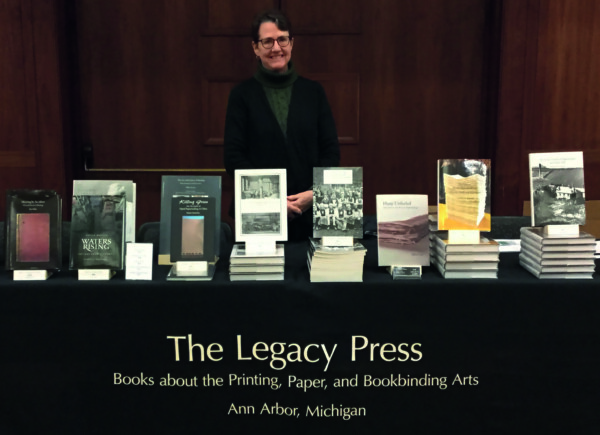
Our Spring 2026 issue has just been published with a suitably daffodil-yellow cover containing a wealth of good things. Cathleen Baker chronicles the story of The Legacy Press, her unique…

Words in Flame
27th February, 2026
As the war in Ukraine enters its fourth year, the toll on the country’s cultural infrastructure continues to unfold. Among the most poignant of these losses are Ukraine’s libraries —…
Oscar Wilde: The Importance of Ephemera
30th January, 2026
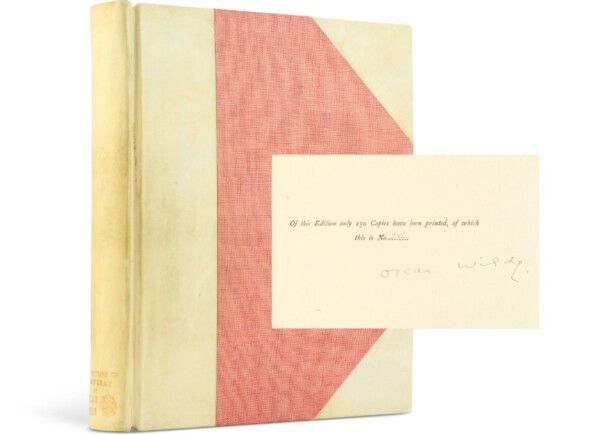
With the 125th anniversary of Oscar Wilde’s death only a couple of months ago, Bonhams is still very much on trend with its sale of the collection of Jeremy Mason on 18th February…