


News
Detective Fiction
Interview with Jessica Starr
18th July, 2024
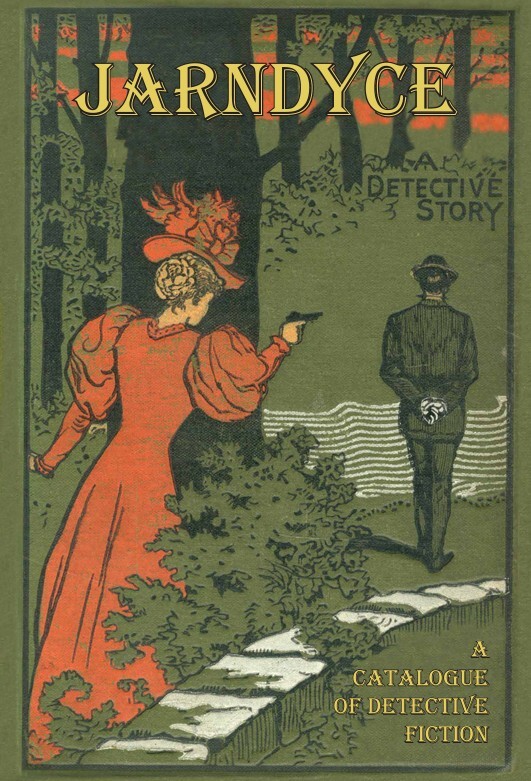
Jarndyce have just published their latest catalogue on Detective Fiction. It includes an impressive 356 books with prices ranging from £10 to £8,500 and covers books from 1827 to 1967, with the bulk of titles from between the 1880s through the 1910s. If you would like to receive a copy of the catalogue please email books@jarndyce.co.uk.
Our Silke Lohmann spoke with Jessica Starr about her experience creating this catalogue.
It’s about time someone focuses on Detective Stories again, what made you work on a catalogue now? Was there a particular book that triggered it?
Most detective catalogues that have come out recently focus on the Golden Age of Detective fiction, the 1920s and 30s. Brian Lake had amassed most of this collection over the last 40 or so years, and it felt like time to give the genre the Jarndyce treatment and show where all our most beloved detective tropes actually came from!
Apart from the big names to be expected, it’s good to learn more about the genre. I didn’t know it was a woman, the American writer Anna Katherine Green, who first used the tagline ‘A detective story’ in her 1883 novel X.Y.Z. Did you find out more about her in the process?
Anna Katherine Green was an American author and a real pioneer of the detective fiction genre. She also created both a spinster detective character and a girl detective character, both of which are still popular and recognizable today in figures like Miss Marple and Nancy Drew.
We love the cover of your catalogue – please tell us more about it!
The cover is derived from the 1897 first British edition of the novel The Last Stroke by Emma Murdoch van Deventer, another American women writer who used the pen-name Lawrence Lynch. I was drawn to this image for the cover because I think this period of detective fiction is often thought of as quite masculine, but there were great women writers and fascinating female characters who were solving and committing crimes right along with the men.
It must have been fascinating to look at all these wonderful books and their covers, did you spot specific trends? At what point do you think the covers became quite important? Which one is your favourite?
The covers are fabulous! One of my favourite things is seeing all the different formats that some of these books came in – it is wonderful to have a copy in wrappers and in yellowback-style boards and in different coloured cloth to see the choices that readers had at the time. Many of these titles would have been displayed in bookshops and kiosks at train stations, so the cover art was particularly important during this time because they needed to grab a potential reader’s attention, resulting in some extremely melodramatic scenes! I think my favourite cover from the catalogue is Arnold Golsworhty’s A Cry in the Night (1899) because it is a perfect mix of a detective drama and classic1890s decadence.
What’s the earliest book you have included? Why is it so special?
The earliest book on our catalogue is a first edition of Richmond, or, scenes of in the life of a Bow Street Runner published in 1827. It is most often attributed to Thomas Skinner Surr but sometimes also Thomas Gaspey. It is an early example of a so-called ‘Newgate novel’, which was inspired by the Newgate Calendar, originally a monthly bulletin of executions put out by the Keeper of the Prison, but by this point the title had been commandeered by publishers who would produce accounts of sensational crimes and notorious criminals. Richmond incorporates the Bow Street Runners, which are considered London’s first professional police force, so this work is important because it highlights not only the criminals and their crimes but also the men who captured them.
Did you make any discoveries?
Detective fiction has been a popular area of study for a century, so I don’t think I made any ground-breaking discoveries, but I certainly learned a lot in the process!
All books are in English, but you included some detective stories by French writers. Did you come across any other nationalities with a rich history in the genre?
We included a number of French and American writers because both were so important to the development of the genre. Eugène François Vidocq’s 1828 Memoirs, which covered his life from being a career criminal to the founder of the French Police, is a foundational text even though it is non-fiction, and it inspired a lot of the ‘autobiographical’ fiction of the 1850s. Edgar Allan Poe’s 1841 story ‘The Murders in the Rue Morgue’ is the earliest detective story in English. So while many of the most enduring literary detectives are English, you cannot tell the story of the earliest days of the genre without the French and the Americans.
What is your favourite entry?
I absolutely love Mary Elizabeth Braddon’s Lady Audley’s Secret and we have a wonderful bright yellowback copy in this catalogue. I studied the novel as an undergraduate and remember my lecturer saying that the story featured the first ever blonde villain. While I am not sure if that is actually true, the novel is a masterwork of atmosphere and of turning the safety of the domestic sphere on its head. With Victorian ideas about phrenology and how morality was so tied up with beauty and class, the idea of having a perfectly lovely and charming murderess is so much fun. Braddon is also phenomenally interesting in her own right.
If you would like to receive a copy of the Detective Fiction catalogue please email books@jarndyce.co.uk
Remember to sign up to The Book Collector’s fortnightly newsletter to read about interviews, news, reviews, events and more from the book world!
More News
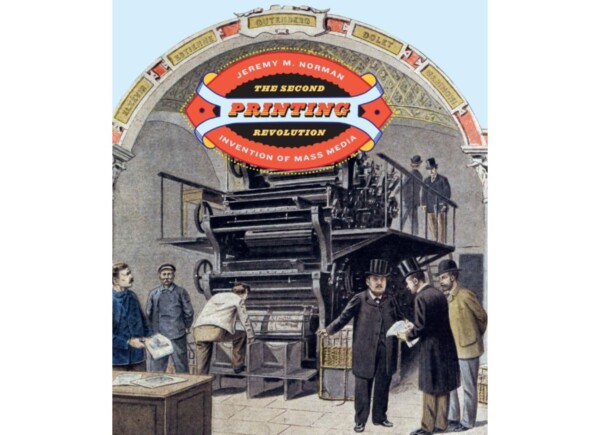
Book Review: The Second Printing Revolution: Invention of Mass Media
30th October, 2026
Paul W. Nash The Second Printing Revolution: Invention of Mass Media By Jeremy M. Norman (New York: The Grolier Club (and University of Chicago Press), 2026. xiii + 296 pp.,…
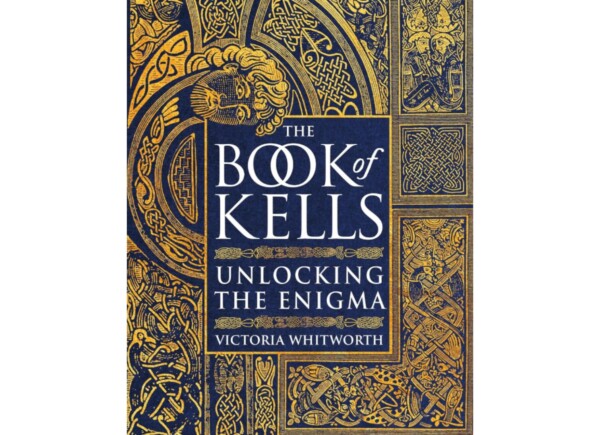
Book Review: The Book of Kells: Unlocking the Enigma
23rd October, 2026
Jeremy Knight The Book of Kells: Unlocking the Enigma By Victoria Whitworth (London: Head of Zeus, 2025. 336 pp., colour illus, £35. isbn 9781788541800) Reviewed in The Book Collector Autumn…

Book Review: The Migrants: A Memoir with Manuscripts
16th October, 2026
Sheila Markham The Migrants: A Memoir with Manuscripts By Christopher de Hamel (London: Allen Lane, 2026. 320 pp., 63 illus, £25. isbn 9780241670125) Anyone in the world of rare…
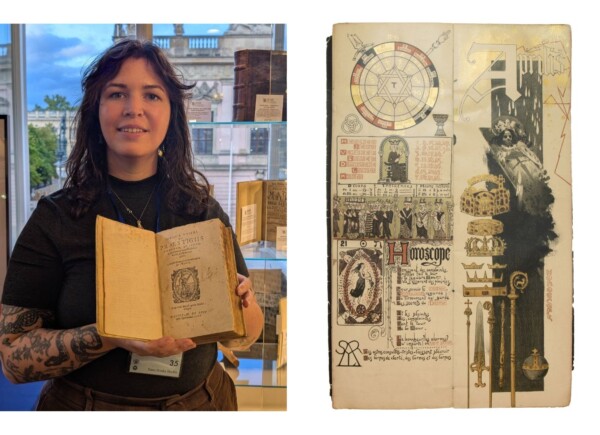
Interview with Clare Marshall and Simon Finch: Weirdiana Catalogue
9th October, 2026
Weirdiana, an exploration of witchcraft, the occult, the mystical and the “out there”, is a collaboration between Clare Marshall of Marshall Rare Books and Simon Finch of Voewood Rare Books….

Highlights from the ILAB Symposium 2026
7th October, 2026
The Book Collector team had a very enlightening time at the ILAB Symposium, which was filled with lots of interesting talks and great networking opportunities. The first half of the…

Back Issues: Your PDF Archive Is Back
7th September, 2026
We’re pleased to announce a new addition to your My Account area: Back Issues — giving subscribers simple access to PDF copies of every issue of The Book Collector, from 1947 to the present. When…