



News
Oscar Wilde: The Importance of Ephemera
Interview with Jeremy Mason
30th January, 2026
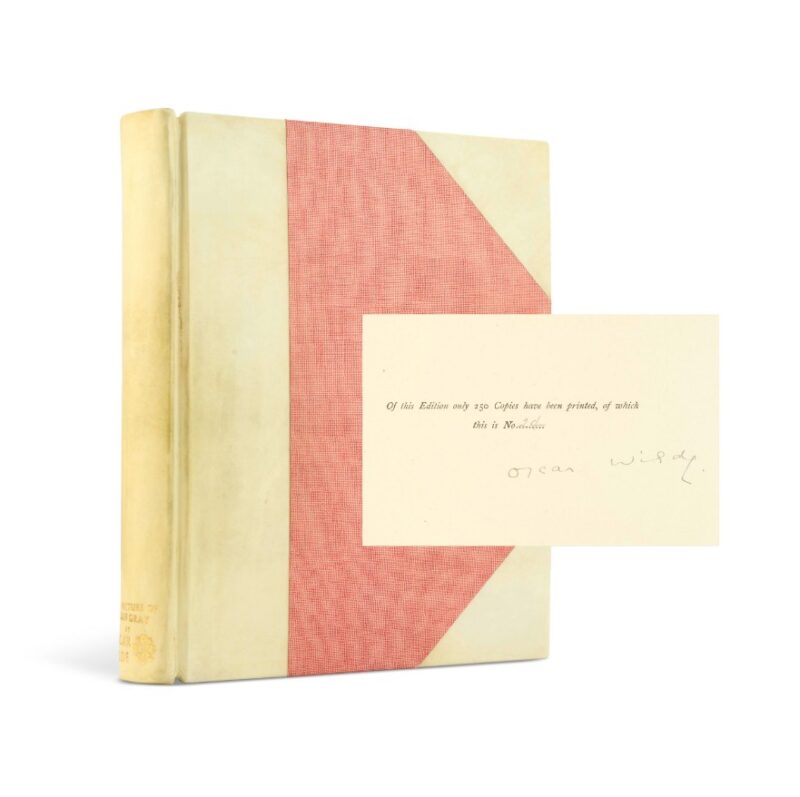
With the 125th anniversary of Oscar Wilde’s death only a couple of months ago, Bonhams is still very much on trend with its sale of the collection of Jeremy Mason on 18th February at its Knightsbridge saleroom. We feel privileged to have been able to interview Jeremy, who is a noted Wilde collector and bibliophile, no doubt known to many of our readers. After 60 years of collecting Wilde, Jeremy has decided it is time to give younger collectors and institutions a chance to buy some of his prized possessions, among them some rare ephemera.
Oscar Wilde: The Collection of Jeremy Mason will be sold at Bonhams Knightsbridge on 18th February with the preview starting on the 15th. The 156 lots carry estimates from £200 to £25,000.
Jeremy, you started your Oscar Wilde collection 60 years ago. What made you collect his work? Was it one particular item that triggered your idea to collect all things Wilde or had you hoped to collect Wilde one day after you had been introduced to his work at school?
In one of my English lessons my master played me Micheál Mac Liammóir’s The Importance of Being Oscar, and then I read Hesketh Pearson’s The Life of Oscar Wilde. And the two combined made a seismic change in my attitude. I became a young Wilde at the time.
It must have been terrible for everybody around me. I constantly quoted from his works, and it must have irritated my parents, but they still gave me the complete works of Oscar Wilde for my birthday, bound in leather, which is nice.
And then I started to read everything I could get my hands on. I was mainly interested in his casual wit, I think you would say, all the quips were very appealing to me. But then I bought a very cheap edition of Salome with the illustrations by Aubrey Beardsley, which was probably the very first thing I bought. And that captivated me too – Salome has always captivated me.
Your much-admired collection has always been described as giving an extraordinary insight into the life and works of Oscar Wilde. Are there one or two items you found particularly insightful?
I think the whole collection is rather insightful, actually. Of course, the letter I first bought, which was when I was 20 or 24, was the one to Reggie Turner in which he said ‘…I have made Aubrey [Beardsley] buy a hat more silver than silver…’. I took photocopies around with me and read them to myself all the time. I thought it was so wonderful. It was everything I thought about Wilde. You know, I thought The Importance of Being Earnest was wonderful, but I came to it fairly early on, obviously, but I wasn’t attracted to it as much as I was to other things.
I admired his conversational ability. It was Yeates who said, ‘I’ve never known a man who spoke with such perfect sentences. ‘ I think he started off quite a genial bloke, but of course it got quite nasty towards the trial, and he got rather pompous and I liked him less. But at the beginning he was really likeable and, I think, people were attracted so much to his conversations.
When you started collecting, was ‘collecting Wilde’ already very popular?
No, nobody was collecting Wilde. They were very cheap. I used to go to Bertram Rota at lunchtime in Savile Row. (I incidentally listened to the Beatles on the rooftop there; their last performance ever.) They were always very gentle to me, and they let me pay in instalments sometimes, because I was very poor. I was on a Christie’s wage. So I used to buy quite a lot of small things, but they told me once I’d paid a bit on account, they’d put it on a shelf as sold. Mind you, Sawyer, who sold me a letter, also gave me credit. The letter only cost £170. I paid in instalments too, and one day he said that I had paid it and I could come and get it. It’s a wonderful letter, that one.
Which other Wilde collections do you admire most?
I don’t really know who the other collectors are now. There is obviously the Clark Library, they have a wonderful series of things. I never really talked to anybody about my collection, I just bought things. I felt I was doing it on my own until I met Don Mead in the 80s. and I became a very firm friend.
And I met Merlin, of course, in 1980. Because Rupert Hart-Davis did my book on Berneval, I had to get permission from the estate and that’s how I met Merlin. He asked me to dinner, which was a great moment, and we became friends.
Is there an item in a public or private collection you wish you had been able to buy?
I wouldn’t want the million-pound book or £840,000 one, the Salome sold at Christie’s last year, that’s for sure. Of course there were lots of things I couldn’t afford to buy. I had a great friend in Vander Poel, who sold his collection recently, but he gave me a few things. I have been lucky with people who looked after me when I was young and gave me stuff. But of course I wanted everything. When I went to the Opera exhibition at the V&A, I loved the idea of having Richard Strauss’s copy of Salome.
I tried to buy Richard Strauss’s letters, but I got muddled with the online bidding and failed and they made a lot more than the estimate. I would have liked to get some of those, I liked everything to do with Salome. That’s why there are so many illustrated Salomes in my collection.
Which one of the signed copies of his works is your favourite, and why?
The one which is my favourite is the first signed one I bought, which is The Picture of Dorian Gray. It was in very bad condition, but it’s now been beautifully restored, and it cost me £25 for a signed edition, the large paper edition of Dorian Gray.
Everything I bought, I kept, because I had to choose with such care what I bought because I didn’t have any money. But then I had a little spare when I bought a copy of Wilde’s signed The Ballad of Reading Goal inscribed by him to Edward Strangman. It cost me £60, which seemed like a lot of money at the time, but it’s nothing, really.
A lot of research helped me, so I was able to buy things which other people missed.
A huge part of your collection are letters, and of course they tell you so much about a person and the people they correspond with. What did you discover about Oscar or one of his friends that astonished you most?
Well, Wilde’s letters were always magical; every one is sort of magical. Nothing surprised me, particularly. But Rupert Hart-Davis’s The Letters of Oscar Wilde was my bible for ages. I managed to reunite the letter from Andre Gide with the autograph manuscript page from Wilde’s essay on the role of the artist, a very expensive way to join things together, but I felt I had to do it. I wish I could have bought the letter from Wilde to Stephenson thanking her for a wonderful evening, but I couldn’t afford it. They wanted £9,000, but I had to say that a photocopy was good enough. There were lots of things I would love to have bought, but I couldn’t afford them.
I guess price was one of the reasons why you bought ephemera, particularly to do with Oscar Wilde’s extraordinary tour of America. Did you buy the items connected to it in the UK or US?
Yes, indeed. I actually bought all of them in England. Some things I bought from small book dealers who just saw them in country sales. I was able to get Wilde’s school prize giving book for instance, which I think is a magical thing, too. I paid £200 for that.
While many collectors may focus on items connected with Wilde during his lifetime, you have also collected ephemera relating to Wilde from the 1920s to 1950s, which must have given you a great insight into how his popularity evolved?
Yes, it did give me an insight, especially about Lord Alfred Douglas. Everything I bought continued the story. I like the play The Judas Kiss by David Hare, with Rupert Everett. He was so good in it. In it he says ‘…if I go abroad, the Oscar Wilde story ends. If I stay here, it continues.’ I found that play to be true. I continued to carry on collecting Wilde, and in particular the illustrated books – I tried to collect what I could.
I know how passionate you have been about collecting Wilde and how supportive your late wife was. It must be tough to let go of all your treasures, but I am sure that you are also excited that some of your collection will no doubt end up in institutions, making them available to the public, while others may help create new collectors. Is there a museum or library where you would love to see part of your collection? And is there a top tip you can give new collectors?
Several big institutions have told me that they want some of the items in my collection. I am quite sad to see my collection go, it quite upsets me, but the benefit is that I can correct things that have been mis-catalogued in the past, and I will be able to let go and say goodbye to my babies. I have been collecting since I was 15 or 16, so of course it is a sad day. I would have loved someone to offer me several million pounds for the whole lot, but of course we know they never do that – it’s not just the money, they just don’t want to do it.
I hope young collectors will be able to buy some of my collection, especially the books at the end, the collections of books. Go for what turns you on! I know I was turned on by all the stuff. I mean, I must have been a bore among my friends, because even they heard all about Oscar Wilde. Mind you, they always said they never knew I had so much stuff.
The collection was always at the back of my mind, and I left bids when I couldn’t be there in person. My brother had to go to the auction and buy the ‘Vegetarianism’ letter for me, and he went weak at the knees at the price. It was £2,000 even then, and there was another letter which he didn’t buy as he thought it was all too expensive – he was my accountant after all. But I did him a drawing of him buying it at auction and sweating like a pig – he framed it, he liked it so much.
Last but not least, is there an item you really couldn’t part with from the collection, however much Matthew tried to persuade you to include it?
I kept a couple of things that my wife gave me, but they were lesser things, and I am not selling my first set of the complete works bound in leather, which my parents gave me. I said to myself that if I’m going to sell the stuff, I’m going to sell nearly all of it.
Oscar Wilde: The Collection of Jeremy Mason will be sold at Bonhams Knightsbridge on 18ᵗʰ February, with the preview starting on the 15th.
For more information and to pre-register, Click Here >
More News
Interview with Clare Marshall and Simon Finch: Weirdiana Catalogue
9th October, 2026
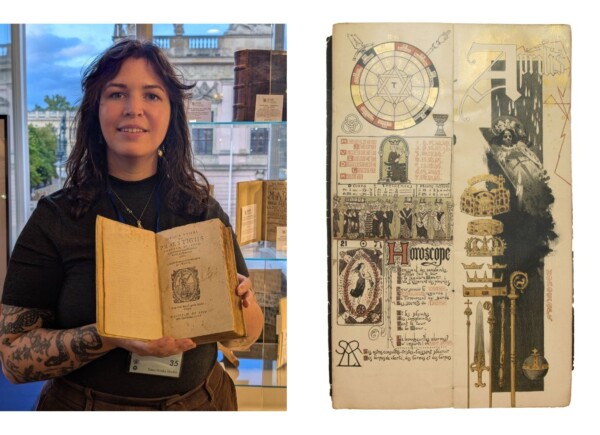
Weirdiana, an exploration of witchcraft, the occult, the mystical and the “out there”, is a collaboration between Clare Marshall of Marshall Rare Books and Simon Finch of Voewood Rare Books….
Book Review: The Migrants: A Memoir with Manuscripts
9th October, 2026
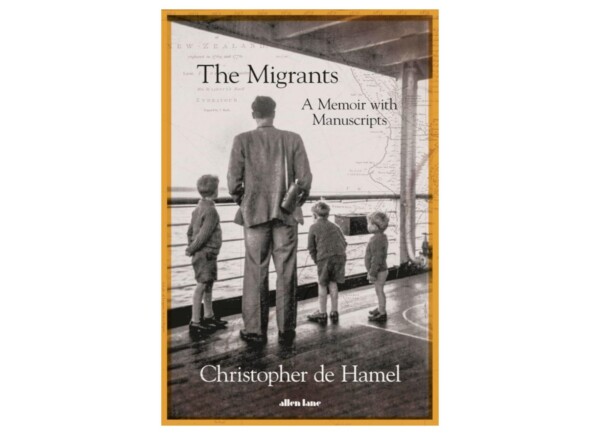
Sheila Markham The Migrants: A Memoir with Manuscripts By Christopher de Hamel (London: Allen Lane, 2026. 320 pp., 63 illus, £25. isbn 9780241670125) Anyone in the world of rare…
Back Issues: Your PDF Archive Is Back
7th September, 2026
We’re pleased to announce a new addition to your My Account area: Back Issues — giving subscribers simple access to PDF copies of every issue of The Book Collector, from 1947 to the present. When…
Important Notice: Fraudulent Website Impersonating The Book Collector
15th May, 2026
We have recently become aware of a fraudulent website operating under the domain: www.thebookcollectorjournal.co.uk This website has no affiliation whatsoever with The Book Collector, The Collector Ltd, or our editorial team. It appears to…
Interview with Gordon Brough
10th April, 2026
Gordon Brough is chairman of Sotheran’s. He was born in Dunfermline but brought up in Dundee. He is a collector turned bookseller. When did you come to London? I…
To the Last Scratch of Ink
13th March, 2026
Just in time for International Women’s Month, Peter Harrington have published “To the last scratch of ink”: The Lives and Literature of Women. This catalogue is the third in a…