



News
The Custodian of Dimbola House
Interview with Dr Brian Hinton MBE
14th February, 2024
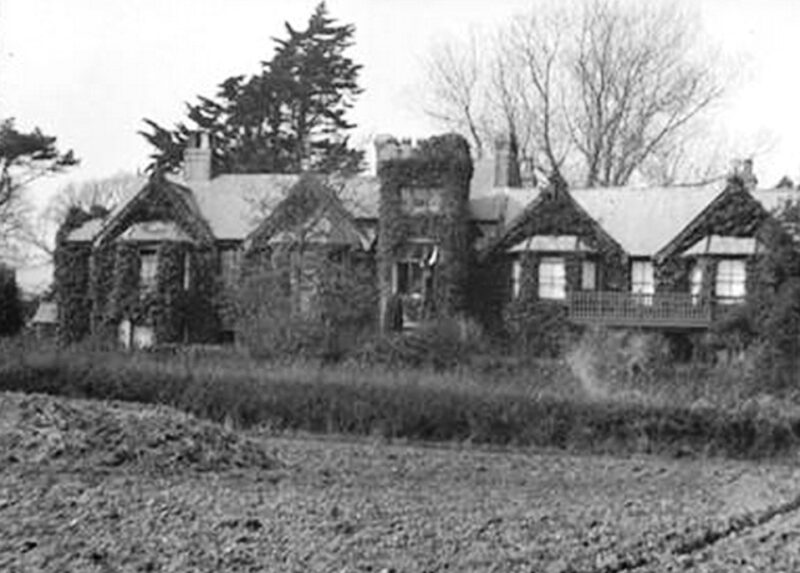
Technicolour Dickens: The Living Image of Charles Dickens just opened at Dimbola House on the Isle of Wight and will be open until the 19th May. The exhibition presents Dickens’ story through the medium of Victorian photography, with each image brought to life in full technicolour. Originally commissioned for the 150th anniversary of his death in 2020 and co-curated by The Charles Dickens Museum, it celebrates the 175 years since the publication of David Copperfield, partly written whilst the author was staying at Ventor on the island. He befriended Tennyson who later became godfather to one of his sons and the exhibition. The exhibition is paired with images of Dickens’ own circle of acquaintances and friends, photographed by Julia Margaret Cameron.
We are talking to librarian-turned-curator, Dr Brian Hinton MBE, who is now custodian of Julia Margaret Cameron’s house, who says of his career that “…it has been a varied, an odd career, but it seems to have all come together in old age!”
Born in Southampton in 1950, his boyhood dream was “to be miseducated at Magdalen College Oxford.” His dream came true and he read English there from 1970-3. He met his best friend Julian Bell at college and both dabbled in writing poetry. Brian took over the Oxford Poetry Society, saved it from bankruptcy, reinvented its magazine and put on readings by the likes of WH Auden – grumpy – and Ted Hughes. Brian recalls that the latter was “…distant until I mentioned that Al Alvarez, the previous guest, had accused him of murdering Sylvia Plath. Result, an explosion – “Al Alvarez is a liar” and a spellbinding rendition of Crow. He was charming afterwards and inscribed original off the cuff poems in my copies of his books.” Brian then did postgrad work on Thom Gunn at Birmingham, leaving with a PhD. Then a year’s academic traineeship at the Bodleian followed, where he sorted out a Michael Moorcock archive, and he finished his higher education with a post grad degree in rare book librarianship at Birmingham Poly.
How did you end up on the Isle of Wight?
I took a job on the Isle of Wight as a branch librarian – John Feather of the Bodleian asked me which university I was going to be attached to and I told him it was a public library, at which he virtually needed smelling salts. I also ended up running the music library in Ventnor. The reason for me taking the job was that I had found out that the legendary and long disappeared poet David Gascoyne was living quietly near Cowes, and I soon set up the IOW Poetry Society with him and his wife Judy, and we put on some very exciting young poets like Jeremy Reed. I subsequently set up the Farringford Tennyson Society, where we met in the poet’s original study to hear the likes of Andrew Motion, pre Laureateship, and Gascoyne himself who said that the poem The Kraken had been a big influence on his early love of surrealism.
As part of my duties I chaired the IOW Council of the Arts, and we put on the likes of Hamlet with the RSC – a very young Mark Rylance in his first major role – in a portable theatre, and the Royal Ballet in a marquee outside Osborne House. My boss at the time had brought me in to pep up Freshwater Library, but then I also devoted myself to reviving the Island’s arts scene. A very hostile Arts Council document described me as someone who did “not monitor arts events as a local government officer but acting out of a private passion”. Guilty as charged!
Presumably that’s why you got involved with rescuing the house?
Another day at my desk, the phone rings with a concerned Islander saying that permission has been granted to demolish Dimbola, home and workplace of Julia Margaret Cameron. I called an emergency meeting of the Tennyson Society and started a campaign during which my own new bosses called me the likes of “amateur” and “dreamer”, I was banned from leaving the library without permission, checked on, indeed spied on, but at a meeting I did not disclose I made a presentation to The Foundation of Sports and the Arts, and they gave me enough money to buy the Cameron House side of Dimbola (permission had already been given to demolish and replace it with a block of concrete flats). Subsequently we managed to buy the other half with a mortgage, and implement our plan. It remains a museum and arts centre to this day, having hosted the likes of Patti Smith, David Bailey, Annie Liebovitz, Lord Snowdon, Billie Childish, John Otway and Melanie. We opened 30 years ago with Koo Stark cutting the ribbon in June 1994.
When we saved Dimbola, we unearthed original Willliam Morris wallpaper, Philip Webb tiles, ornate fireplaces and carved wooden features which show Julia’s exciting pairing of her own Indian heritage in Calcutta, and the arts and craft movement. After her death, and through the good offices of Anne Thackeray Ritchie, the likes of Virginia Woolf and her sister Vanessa Bell (with their father Sir Leslie Stephen) were regular visitors. Virginia wrote a sarcastic play Freshwater about the mad goings on, and more seriously the first proper book about her great aunt in 1926, published by the Hogarth Press.
How did Charleston inspire you to take on Dimbola?
I stayed with my friend Julian and his family in East Sussex, asked why his father, the delightful Quentin, was talking to himself in the study, and was told he was dictating a biography of his aunt Virginia Woolf. Through them I met some wonderful, gracious people, survivors of Bloomsbury like Duncan Grant and Frances Partridge.
When Julian’s family were instrumental in saving Charleston Farmhouse from being whitewashed and put back as if Vanessa Bell had never been, I took mental notes, when literally ten years later I had to invent a similar template – half museum half contemporary arts centre – there was a plan in place.
Once a librarian, always a librarian – it must have helped you with the restoration of the house and establish it as a research centre for JMC Scholars, tell us a bit more about it. Are you still looking for more works or letters, books etc?
Well, the thanks I got from a grateful IOW Library Service, was to be made redundant – my post “deleted” – and I diverted my energies to becoming hon curator and by hook or by crook finding enough JMC related books to fill a research library.
I am always interested in more JMC related material, and indeed Bloomsbury books also relating back to her and the family, the answer is absolutely yes please.
I would love to have either of the large paper copies of her illustrations to Idylls of the King and Other POems (Kin 1874/5) but they are probably out of reach and budget for us.
Your Dickens exhibition is of course of great interest to us – tell us a bit more about how it came about and although Julia Margaret Cameron never photographed Dickens, why is it such a perfect fit for the house?
Yes, Dimbola is currently hosting a Technicolour Dickens show, straight from the Dickens Museum in Clerkenwell, opened by Ian the novelist’s great grandson. As far as we know, Dickens and Mrs Cameron never met, but we also show photographs by her of many of his closest friends – Thomas Carlyle, Tennyson and others with that kind of targeted energy, special to the late 19th Century.
Julia Margaret Cameron had been at the centre of what we now call the Freshwater Circle, a kind of literary salon which took over the mantle of the Little Holland House soirees run by her sister in Kensington. London friends like Tennyson, GF Watts, Lewis Carroll, Edward Lear, John Millais, Sir Arthur Sullivan et al would dine at Farringford and Dimbola with the likes of Charles Darwin, the Greek scholar Benjamin Jowett, and the astronomer Pritchard, in a wonderful ferment of artistic and scientific debate.
This odd group released from high seriousness in the environs, Julia took mad photographic portraits of them all on her new wet collodion camera. She had turned a hen house at Dimbola into a glazed studio directing light and shade by the use of old carpets laid on the roof. She won international prizes, was the first photographer in residence in what was later renamed the Victoria and Albert Museum, and held annual sales of her prints in a gallery in Regent Street.
Dimbola House is also home to the archive of the Isle of Wight Festival, how did that come about?
I had earlier written the first proper history of the Isle of Wight Pop Festivals, and in 1995 I was asked to update this locally produced book I had written to accompany a one off revival festival. I updated this as ‘Message to Love’, to tie in with the film and 2CD highlights of the 1970 Afton Festival. Five years later I was asked to put together a temporary exhibition, to time in with the 30th anniversary at Dimbola by the then Chairman Ron Smith – also site manager of that huge, 600.000 plus event. This was so popular with visitors that it stayed up. John Giddings came over in 2004 to ask me to sign a hundred copies for his musical guests that year – Bowie got number 1 – and offered money to upgrade the display. He proved to be a major donor, and friend.
From that I became a hack for hire, for Sanctuary and then Helter Skelter writing musical studies of Joni Mitchell, Van Morrison – who took umbrage and wrote a very hostile song “New Biography” at my expense – Elvis Costello, Ashley Hutchings and the birth of English folk rock, and on country music and Americana (Robyn Hitchcock told me he had found a well used copy in the rest room of a downtown Nashville recording studio).
Last, but not least, we know you are a book collector yourself – what are your personal favourites?
My own book collecting instincts have run wild, I find an enthusiasm whether Angela Carter or Lee Harwood or Edward Gorey, collect whatever I can find, signed if possible, then move on to the next obsession. Just the same with vinyl. My rock music archives were recently plundered for the monumental 7 volume (eventually) history of Island Records and I am currently working out how to bequeath various portions of my estate to the likes of Dimbola (who will need to purchase an adjacent house to store and archive them) and Magdalen.
I remember pilgrimages up to London to the likes of Compendium books, Record and Tape Exchange, Cecil Court (where I am known as Rackham man), Any Amount of Books, Henry Pordes, those wonderful remainder shops where I found many a bargain but now seem to have migrated online. Running into an immaculately dressed Martin Stone and viewing what he was punting round – one rather nondescript volume only made sense when he showed me the ownership signature, Percy Shelley – was always a highlight.
Through nefarious means I hooked up with Iain Sinclair, who puts various iterations of me in Lights out for the Territory as a “hedge scholar” and Radon Daughter as the inspiration for a monstrous DR TCP Hinton, not me but a malign succubus. I conducted one of the few proper interviews with the erudite and magical Martin Stone in a TV film directed by Chris Petit, The Cardinal and the Corpse, where I mingled off set with the terrifying Driff of the rare book guide, fully tweeded up, and the sinister but gentlemanly novelist Robin Cook/Derek Raymond, and finally hooked up with the benign Michael Moorcock, a book collector par excellence, and of course a visionary.
Shortly after I had been awarded an MBE for services to the Arts – I am told to the fury of some of my previous library bosses – I was sitting quietly in the tea room (well worth a visit, home-made cake and the like) when I was told I had visitors. It turned out to be Helen Vendler and a lovely Irish lady called Marie, who had been on a week’s pilgrimage with Marie’s husband and had found my IW writers guide (soon to be republished) a great help and had come to thank me. “And you know my husband Seamus” said his wife, and round the corner came a beaming Nobel Laureate. Needless to say we met up at the Farringford, drank whisky in the poet’s study, and Mr Heaney had two high towers of books to sign, which he did with good grace, putting in lovely inscriptions “keeper of the poet’s places” for me, and in another speech bubbles leading from Sweeney in a coracle, and the text “It’s a long way to the Isle of Wight”. Treasured!
From the 29th March to 1st November the house is open every day from 10 am to 4 pm, before then, times vary slightly, visit www.dimbola.co.uk for further information.
More News

Important Notice: Fraudulent Website Impersonating The Book Collector
15th May, 2026
We have recently become aware of a fraudulent website operating under the domain: www.thebookcollectorjournal.co.uk This website has no affiliation whatsoever with The Book Collector, The Collector Ltd, or our editorial team. It appears to…
Interview with Gordon Brough
10th April, 2026
Gordon Brough is chairman of Sotheran’s. He was born in Dunfermline but brought up in Dundee. He is a collector turned bookseller. When did you come to London? I…
To the Last Scratch of Ink
13th March, 2026
Just in time for International Women’s Month, Peter Harrington have published “To the last scratch of ink”: The Lives and Literature of Women. This catalogue is the third in a…
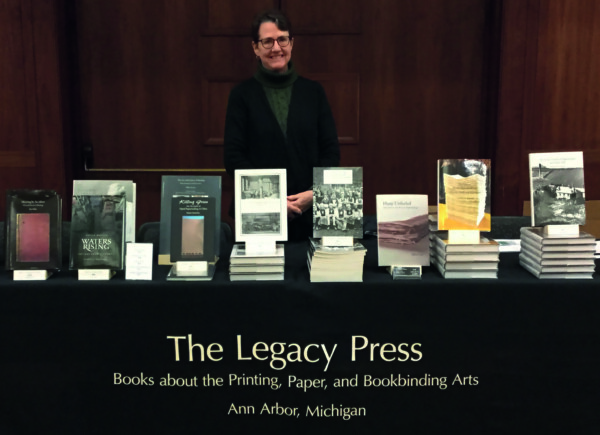
Spring has Sprung
6th March, 2026
Our Spring 2026 issue has just been published with a suitably daffodil-yellow cover containing a wealth of good things. Cathleen Baker chronicles the story of The Legacy Press, her unique…
Words in Flame
27th February, 2026
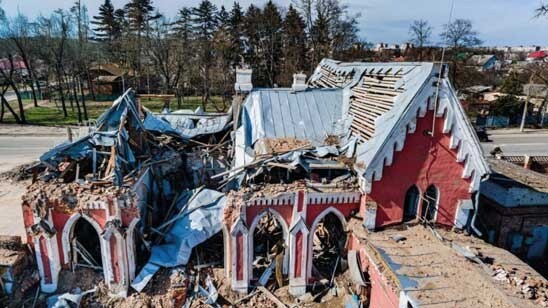
As the war in Ukraine enters its fourth year, the toll on the country’s cultural infrastructure continues to unfold. Among the most poignant of these losses are Ukraine’s libraries —…
Oscar Wilde: The Importance of Ephemera
30th January, 2026
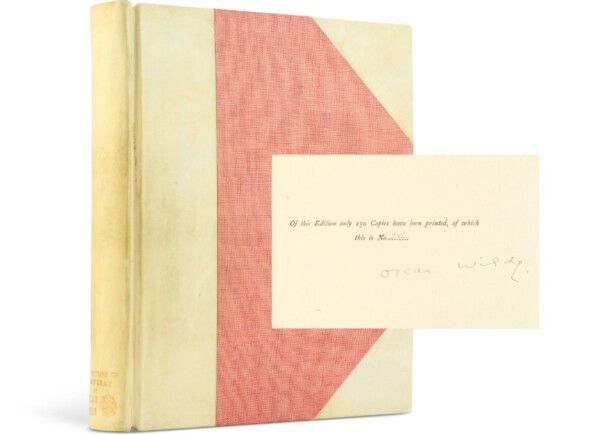
With the 125th anniversary of Oscar Wilde’s death only a couple of months ago, Bonhams is still very much on trend with its sale of the collection of Jeremy Mason on 18th February…