


News
The ‘Little Red Book’ Collection for sale at Firsts Hong Kong
Interview with Dr Matt Wills
28th November, 2024
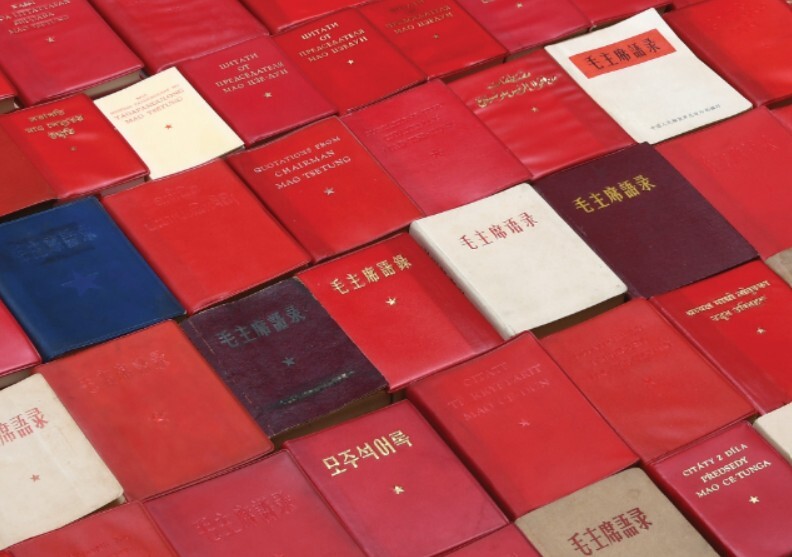
At Firsts Hong Kong this December, Peter Harrington is offering for sale the world’s largest and most wide-ranging collection of editions of Quotations from Chairman Mao, also known as the “Little Red Book”. Silke Lohmann spoke with their Asia Specialist, Dr Matt Wills, who has been cataloguing the collection over the past year, to find out how it all came together.
How exciting to have a collection of the famous ‘Little Red Book’ available in time for Firsts HK and during the 60th anniversary of its first publication. Tell us a little bit about the origin of the collection.
It is indeed very exciting! I am passionate about Chinese book history and giving Chinese books greater prominence in the collecting and bookselling worlds. The collection is the result of many years of collecting by Justin G. Schiller, much of it purchased during exciting visits to China in the 1990s and 2000s, where trips to flea markets are always rewarded. It has continued to expand since it was shown at the Grolier Club a decade ago and now encompasses around 200 items. What is special about this collection is that it is a unique opportunity to trace the history of the book’s publication through the evolution of the actual physical object. It would be extremely difficult to repeat such a collection were someone to begin amassing one today.
It is of such importance that you have also used it for your research for the forthcoming publication of the analytical bibliography of Mao’s Quotations. What made you start that project?
Before I joined the team at Peter Harrington, I spent a decade in the academic world studying modern Chinese publishing. That research, and my own book collecting, piqued my interest in the bibliographical analysis of 20th-century books. This collection, in its breadth and depth, presents an unmissable opportunity to undertake such an analysis for one of the world’s most important works. I fervently believe that the ‘Little Red Book’ merits the same kind of treatment as more traditional subjects of bibliographical analysis, such as Shakespeare and classic literature. It shaped the lives of millions of people in the 20th century.
What surprised you most when you looked through the collection?
Historians often describe Mao’s Quotations as ‘the ultimate symbol of cultural uniformity,’ yet its early editions ironically reveal a remarkable diversity. These variations arose from shifting political agendas, practical printing challenges, and even serendipity, resulting in a complex and relatively underexplored publication history.
In my academic work, I have long tried to dispel the notion that Chinese propaganda was homogenised. But I was genuinely not prepared for the extent of the variation in this collection, in particular with respect to content and design. If you look at the first to third editions and the precursors in the collection, you soon realise how fraught was the creation of a canon of Maoist sayings, with compilers regularly changing their minds as to size, scope and emphasis. As a visual historian, I also loved seeing the way in which printers and binders had to confront the same choices as their colleagues in other countries. What tooling to use to decorate this binding? Should we bind copies in cloth or vinyl? What typeface and page layout are appropriate? It is not common to think of book production sponsored by powerful states in this way, and the collection provides a fresh perspective.
Although there are variations to the text in the different editions, I found the changes in its appearance particularly interesting. Can you expand a little bit on that please?
The ‘Little Red Book’ took a while to settle into its aesthetic. Take bindings, for example. If you look at the precursors, you will see that these came in a variety of bindings, and the first to third editions appeared in a range of bindings. The red vinyl only became hegemonic from 1966 onward, but even with this blueprint, publishers had many choices to make concerning appearance. Should the front cover have gilt or blind lettering? What was the appropriate size for this lettering and for editions themselves? How about some customised cases and pouches for those who wanted something a little different? A hallmark of the ‘Little Red Book’ phenomenon is that once distribution had reached saturation point, new innovations were needed, whether this be the production of super-small editions, the addition of colour frontispieces to some of the foreign translations, or the combining of the Quotations with Mao’s poems and prose. There is in fact a lot similar in this to post-war book publishing in other parts of the world: innovation – the repackaging of old content in new ways – was the name of the game. Editions were for the most part ‘little’ and for the most part ‘red’, but don’t let this implied simplicity fool you.
Do you have a favourite ‘satire’ version?
The section on satire and subversion is a really fun part of the collection. More subversion than satire, the Easton Press ‘collector’s edition’ (1996) is a firm favourite. What would Mao have made of his words being reprinted by a US publisher that has also produced signed limited editions of Reagan and Thatcher? It is a delicious subversion of a core tenet of Maoism and an apt commentary on the way in which the ‘Little Red Book’ means many different things to many different people.
What makes the ‘Little Red Book’ one of the most important books ever published?
One word: ‘impact’. In 1970, the book was mandatory reading for approximately one fifth of the world’s population and was read by tens of millions of people in other countries. Few books can claim the same. It shaped the course of insurgencies and protest movements, stoked cold war anxieties about the spread of communism, and became a cultural touchpoint for music and art. Today, China is of course one of the world’s superpowers, and you cannot understand how we got to that point without understanding the history of global Maoism, the ‘Little Red Book’, and the Cultural Revolution.
It was first published in May 1964, a year after the PMM exhibition, which only included Western materials. Imagine there had been another PMM exhibition covering more global printing, at which point would the ‘Little Red Book’ have been included do you think, or at what point had its importance become obvious?
I am sure a PMM Global exhibition would have included the ‘Little Red Book’ – it was seemingly everywhere by 1967. This question allows me to return to my reasons for spending so much time working on this collection. PMM was a rather flawed project. What a shame that Carter, Muir et al. limited their scope to just ‘Western’ books, and books nearly all by men, when with a little more research, they could have produced a reference worthy of the complex and globally interconnected history of the book and of human thought. In my treatment of this collection, I have tried to do my small part to flesh out a historical narrative that PMM neglected to tell.
View details of the collection on Peter Harrington’s website >
See what else is on offer at Firsts Hong Kong >
More News
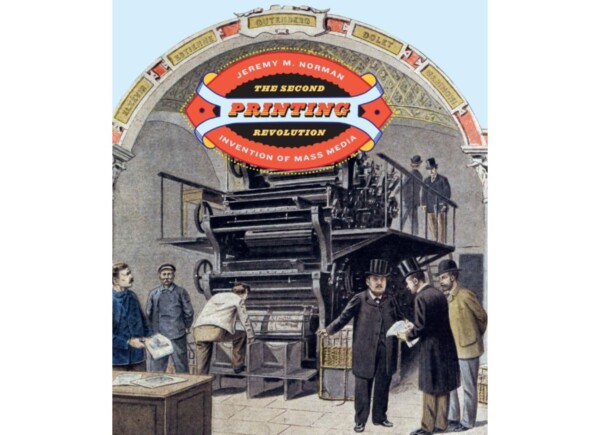
Book Review: The Second Printing Revolution: Invention of Mass Media
30th October, 2026
Paul W. Nash The Second Printing Revolution: Invention of Mass Media By Jeremy M. Norman (New York: The Grolier Club (and University of Chicago Press), 2026. xiii + 296 pp.,…
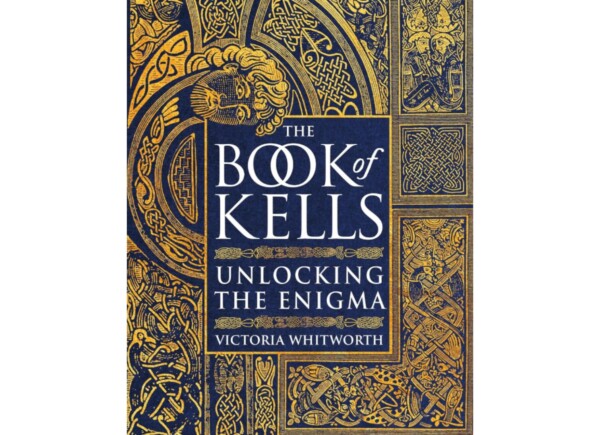
Book Review: The Book of Kells: Unlocking the Enigma
23rd October, 2026
Jeremy Knight The Book of Kells: Unlocking the Enigma By Victoria Whitworth (London: Head of Zeus, 2025. 336 pp., colour illus, £35. isbn 9781788541800) Reviewed in The Book Collector Autumn…

Book Review: The Migrants: A Memoir with Manuscripts
16th October, 2026
Sheila Markham The Migrants: A Memoir with Manuscripts By Christopher de Hamel (London: Allen Lane, 2026. 320 pp., 63 illus, £25. isbn 9780241670125) Anyone in the world of rare…
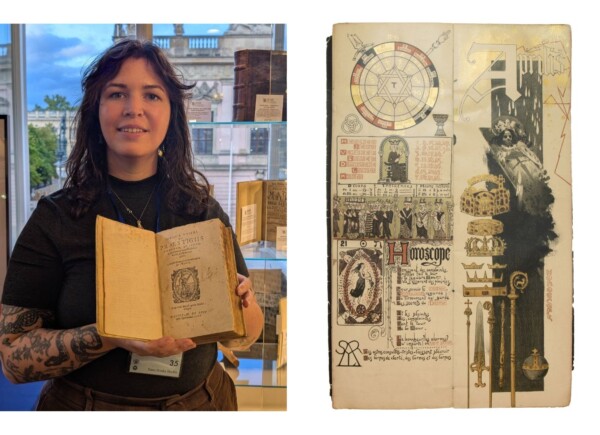
Interview with Clare Marshall and Simon Finch: Weirdiana Catalogue
9th October, 2026
Weirdiana, an exploration of witchcraft, the occult, the mystical and the “out there”, is a collaboration between Clare Marshall of Marshall Rare Books and Simon Finch of Voewood Rare Books….

Highlights from the ILAB Symposium 2026
7th October, 2026
The Book Collector team had a very enlightening time at the ILAB Symposium, which was filled with lots of interesting talks and great networking opportunities. The first half of the…
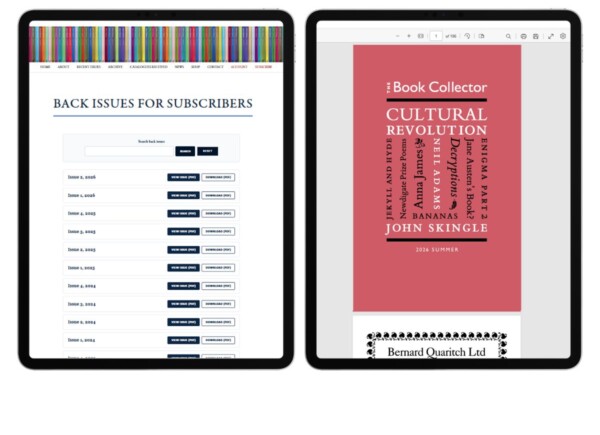
Back Issues: Your PDF Archive Is Back
7th September, 2026
We’re pleased to announce a new addition to your My Account area: Back Issues — giving subscribers simple access to PDF copies of every issue of The Book Collector, from 1947 to the present. When…