



News
Treasures
Interview with Leo Cadogan
10th October, 2024
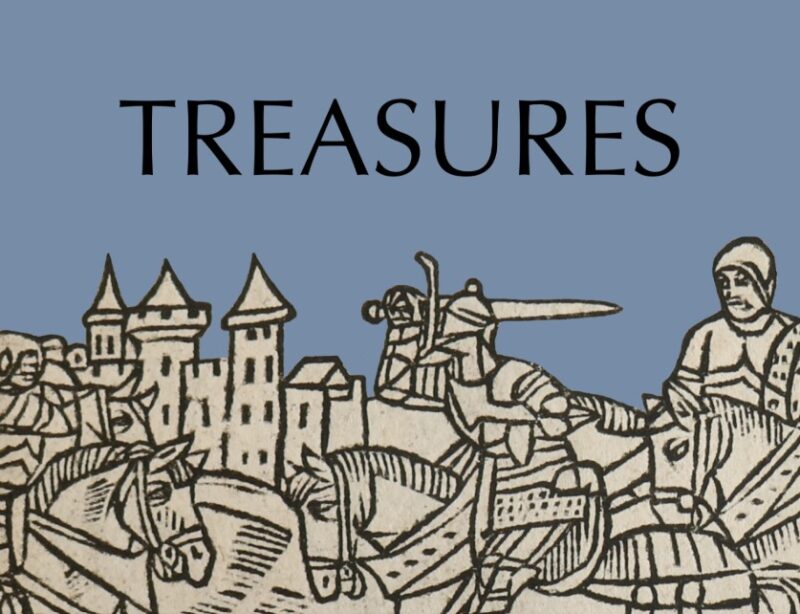
Silke Lohmann speaks with Leo Cadogan about their latest catalogue, Treasures.
Your latest catalogue, beautifully designed by the way, covers ten treasures from 1480 to 1700. What’s your personal favourite?
I probably have two favourites at the moment. One is a 16th-century lawbook that an owner has assembled by putting parts of different books together. It raises interesting questions about the books it’s made from and how the booksellers sold them. It has woodcuts too.
The other is the first edition of an early 15th-century guide to Christian missionary work amongst Muslim populations, including explanations of how to navigate language barriers. The author had gone to Istanbul (then called Constantinople) because he loved Greek literature, but he met Franciscan missionaries there and his life took a new turn.
Both of my favourites came from the same library – the great south German collection of Buxheim Charterhouse, which was sold off in the 19th-century.
Although most of the items are bound works, you have two that aren’t and are particularly intriguing. Tell us a bit more about the ‘confetti’.
This is one of the medals that are reported to have been flung at the 1625 Paris wedding of English king Charles I and French princess Henrietta Maria. It is very light, which is probably crucial, because you would be less likely to be hurt if it hit you. Flinging medals is an interesting old custom. It was also reported at the coronation of George IV. I wanted to put this item in a ‘Treasures’ catalogue because, being made of precious metal, it is ‘treasure’ in the traditional sense. It has a portrait of the bride and groom to one side and an emblem with a reference to Virgil to the other. Virgil had written a line of poetry about the mixing of the lily and the rose – a useful metaphor for an Anglo-French marriage like this one was.
I have heard all about the excitements of photographing the second unbound item, the stunning manuscript roll. What makes it so special?
It is really a crazy thing. It is a grant of arms by an exiled king with no power – James II, who was living in the castle of Saint-Germain-en-Laye in France. It identifies a member of a Norman family called Campain as being from the Campion family of Kent. The herald was an Irishman called James Terry. I imagine that King James made some money from the grant, and that the Campains were hoping that he would return to the throne, at which time they would earn something from their investment. Neither of those things came to pass. It is also as you say visually stunning. We have only traced one other comparable example of Terry’s work.
It was very exciting to photograph. It took a day. It is nearly three metres long and we had all sorts of challenges with shadow, focus and lighting. But we made a nearly-60-cm-fold out of it, from a single photo. The photographer was my colleague Sian, who also designed and co-wrote the catalogue.
The Venetian incunable ‘Rosarium decretorum’ is only one of 22 located copies – it must have been hugely exciting to find it. What makes it so special?
It is such an enormous and imposing book (something we tried to make clear with the photographs). The copy has good margins, is clean, and has nice rubrication. This lovely big item was bound for a monastery using pigskin and was later in the collection of Albert Ehrman, builder of the famous Broxbourne library of the history of printing, bookselling and binding. This was a new edition of an important commentary on Gratian’s Decretal (the key work of medieval canon law), with new letters at beginning and end, one to the future Pope Pius III. The copy even has the odd interesting annotation. The combination of rarity and visual appeal make the book stand out.
Tell us about the journey of the highly influential ‘Legenda Aurea’.
This copy of a 1502 Strasbourg edition of the Golden Legend – a key source for saints’ lives – was bound in Nuremberg (binding stamps and printer’s waste used for a pastedown prove it) – and then went to Pannonia in central Europe, where it was in the collection of an astronomer who had been a student of the famous astronomer Peter Apian (d. 1552). Interestingly, it is one of two books in our list which clearly went through the Nuremberg book trade. We also have a Boethius from Lyons, 1506, which is interesting for its annotations, but also has pastedowns from the same Nuremberg printing firm as the one in our Golden Legend.
The first book of ‘mirror’ literature written for agricultural workers is also included in the catalogue. Had you come across other editions before?
No, I hadn’t. All of the incunable editions of this work are rare. The author, Werner Rolewinck, also produced a chronicle called Fasciculus temporum, which is very well known. This is a lesser known title of his. ‘Mirror’ literature was normally written for kings, bishops and the like – not agricultural workers.
The ‘Treasures’ Catalogue is not currently available online, but a print copy can be ordered from:
Leo Cadogan Rare Books Limited
74 Mayton Street, London N7 6QT, UK
+44 (0)20 7607 3190; +44 (0)7906 455229
Leo Cadogan Rare Books (Ireland) LTD
c/o Maurice Ward Art Handling, Unit J10, Swords Business Park
Swords, Co. Dublin K67 W973, Ireland
More News
Important Notice: Fraudulent Website Impersonating The Book Collector
15th May, 2026
We have recently become aware of a fraudulent website operating under the domain: www.thebookcollectorjournal.co.uk This website has no affiliation whatsoever with The Book Collector, The Collector Ltd, or our editorial team. It appears to…
Interview with Gordon Brough
10th April, 2026
Gordon Brough is chairman of Sotheran’s. He was born in Dunfermline but brought up in Dundee. He is a collector turned bookseller. When did you come to London? I…
To the Last Scratch of Ink
13th March, 2026
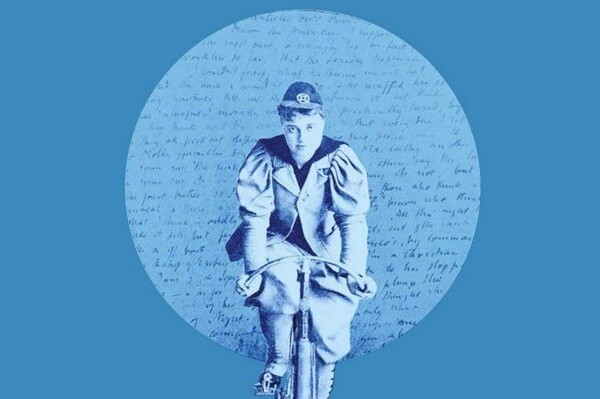
Just in time for International Women’s Month, Peter Harrington have published “To the last scratch of ink”: The Lives and Literature of Women. This catalogue is the third in a…
Spring has Sprung
6th March, 2026
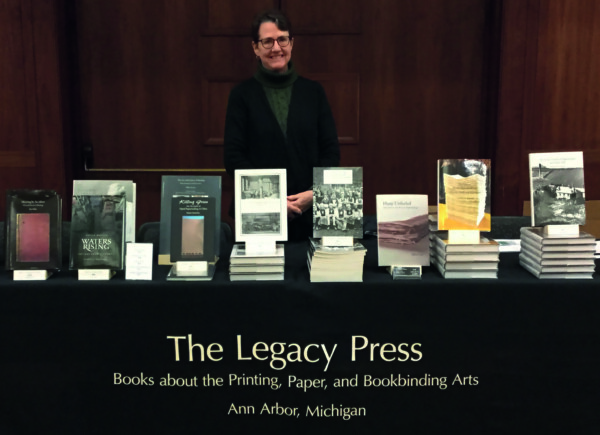
Our Spring 2026 issue has just been published with a suitably daffodil-yellow cover containing a wealth of good things. Cathleen Baker chronicles the story of The Legacy Press, her unique…

Words in Flame
27th February, 2026
As the war in Ukraine enters its fourth year, the toll on the country’s cultural infrastructure continues to unfold. Among the most poignant of these losses are Ukraine’s libraries —…
Oscar Wilde: The Importance of Ephemera
30th January, 2026
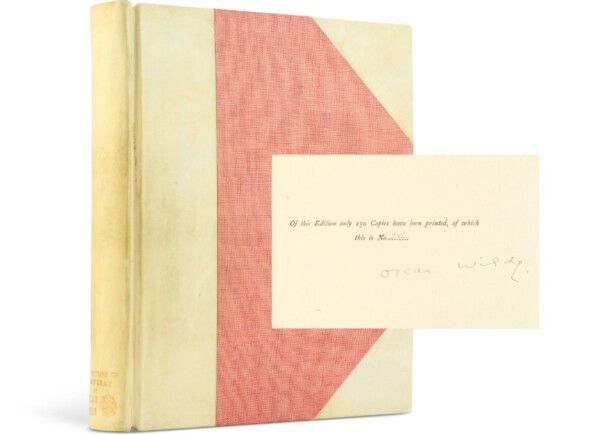
With the 125th anniversary of Oscar Wilde’s death only a couple of months ago, Bonhams is still very much on trend with its sale of the collection of Jeremy Mason on 18th February…